 Book
Book7 min read
Thoughts on <DO HUMANKIND'S BEST DAYS LIE AHEAD>
amid these days so full of AI-driven FOMO, to consider what kind of future for humankind we ourselves hope for.
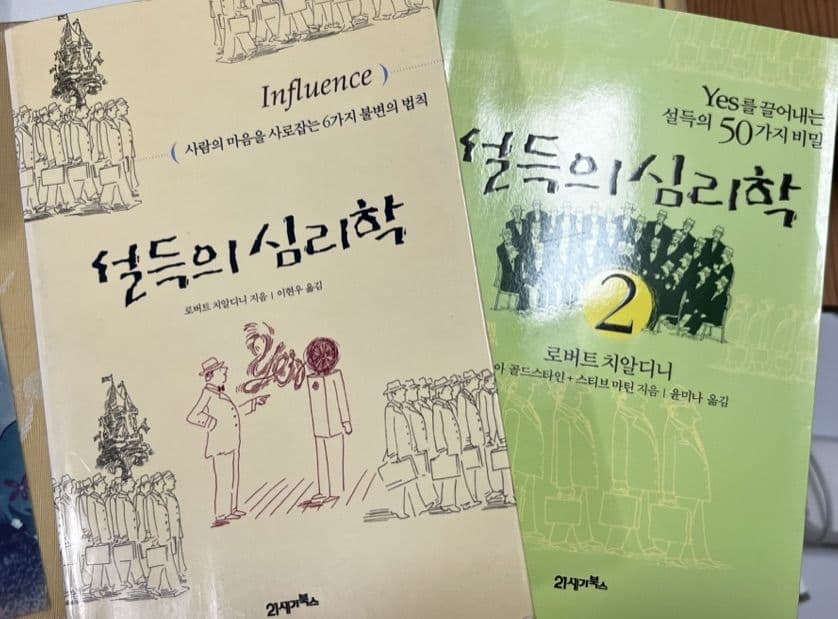
Last month, while reading <Poor Charlie's Almanack>, I came across a list of books that Charlie Munger strongly recommended for young people — and the book I chose to read immediately after was Influence: The Psychology of Persuasion. Life is full of problems that simply cannot be solved through rational thinking alone. I, too, have often felt frustrated and helpless wondering why the world does not operate on logic, even when I was convinced I was in the right. But in those same moments, I was also being quite honest with myself — aware that I was missing something, that I was not yet wise enough. It is in that context that I believe Influence has brought me meaningfully closer to the wisdom I have been seeking.
As one endorsement of the book puts it, this book is filled with things you almost wish only you knew. It is a book about the laws of persuasion. If you alone understood these laws, navigating the world would become remarkably easier. For that reason, I believe this is a book you should read if you want to live life with greater flexibility and joy — and one you should return to every time you find yourself starting to forget it.
The biggest reason I was able to trust and fully engage with this book was the way its author, Robert Cialdini, discovered, tested, and synthesized these principles. He immersed himself directly in groups that use persuasion as a tool for survival, studying their techniques up close. For example, to understand how a car salesman used the law of social proof and the law of scarcity to become a top seller, he actually took a part-time job at that dealership, observed the salesman firsthand, and asked him questions directly. It may be a reaction that goes slightly beyond the book's intended purpose, but I found this hands-on, experimental spirit genuinely admirable and impressive.
Influence explains six universal laws of persuasion that capture the human mind. Influence, Vol. 2 then focuses on concrete cases for each of the six laws, helping readers relate to them more closely and apply them in real life. Each law is illustrated with fascinating and surprising experiments that kept catching me off guard. I found myself laughing out loud imagining the author and his researchers actually carrying out some of these studies.
The Six Universal Laws of Persuasion
One more reason this book stands out is that each chapter concludes with a defense strategy — guidance on how to protect yourself when someone attempts to use that particular law against you for their own gain. In this way, the author consistently sends the message that the laws of persuasion he has identified should be used for the benefit of humanity. The message he most wants to convey through this book is captured especially well in the final epilogue.
Epilogue
Lower animals, unable to collect and process all the information in their environment with their small brains, have as a last resort developed exceptional sensitivity to certain specific information.
In the modern condition — characterized by the explosion of information, change, choice, and challenge — we find ourselves increasingly falling into the same situation as these lower animals.
Our society may be called the information age, but it has never once been called the age of knowledge. Information does not automatically become knowledge. It must be sought out, absorbed, understood, integrated, and retained.
What we truly need to fight back against is the behavior that exploits the reliability of our shortcut decision-making methods for profit.
The author explains why the laws of persuasion are encoded in our DNA to operate unconsciously. The reason he does so is that understanding the cause naturally leads us to think through how we should use this knowledge going forward. As the passage above describes, human beings have developed shortcuts in decision-making — cognitive biases — in order to make efficient decisions and improve survival odds. But the author cautions that relying solely on these survival instincts puts us no different from lower animals. At the same time, because the decision-making shortcuts we have evolutionarily learned also carry genuine benefits, he argues that we must be able to properly resist attempts to exploit those shortcuts in ways that undermine the reliability of the decision-making frameworks humanity has built up over time. This message resonated with me deeply — perhaps because, in a time like the present, I find myself wondering whether the fabric of trust in our society is holding together as it should.
I think I now understand why Charlie recommended this book. If I can truly internalize these laws and put them into practice, I believe my understanding of the world will deepen and I will become wiser. Within the multidisciplinary approach and the latticework of mental models that Munger proposes as a foundation for understanding the world and people, I think these laws of persuasion will serve as the lines that connect dots which otherwise appear unrelated. I must make sure not to let this stop at having merely read a book — but to let it work its way into my life and show up as genuine wisdom.
Bookamid these days so full of AI-driven FOMO, to consider what kind of future for humankind we ourselves hope for.
 Book
Book Book
BookAs I've been getting more into tennis lately, the book <The Inner Game of Tennis> that I read about two and a half years ago came back to mind. When I first read it, I didn't know much about tennis, so I felt like I only understood about 30% of its message. Even so, the book's message about "relaxed concentration" was helpful for life in general — and with renewed passion for tennis, I was curious how differently it would resonate the second time.