 Book
Book7 min read
Thoughts on <DO HUMANKIND'S BEST DAYS LIE AHEAD>
amid these days so full of AI-driven FOMO, to consider what kind of future for humankind we ourselves hope for.
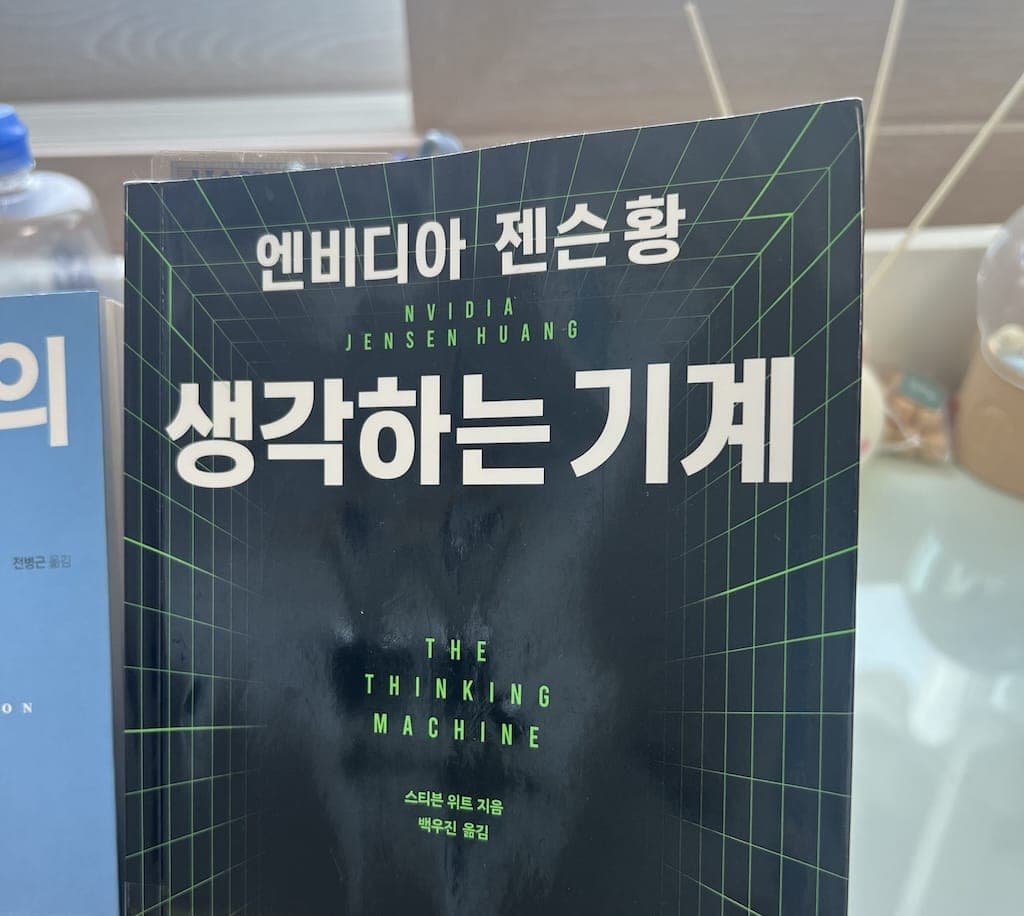
Artificial intelligence is a topic that never fails to come up whenever I meet and talk with someone these days. Between conversations with people around me and the steady stream of newsletters and media coverage, I find myself feeling an increasing sense of FOMO (Fear of Missing Out) — wondering whether I am making enough use of AI. After being driven by that FOMO for several months and pushing myself to use AI as much as possible, I sometimes found myself longing to go back to reading and exercising, the things I had enjoyed before AI became such a dominant subject. It felt a lot like how, during exam season, everything except studying suddenly seems incredibly appealing. It was in that state of mind that Jensen Huang's biography came to me. I had vaguely heard from a friend last year that they had read it, and it had stayed somewhere in the back of my mind ever since. So I searched my local library, found it available for borrowing right away, and started reading it immediately. When I began the book, what I was hoping to get out of it was a concrete understanding of how the industries surrounding AI infrastructure — GPUs, memory, and so on — first came to be. I believe that fear comes from uncertainty and unfamiliarity. So rather than simply sitting with FOMO, I thought that if I understood when and how the foundations of AI were laid, my fear would diminish and I would be able to start forming my own picture of the future. This book is not an autobiography written by Jensen Huang himself, but rather a biography assembled by a professional biographer who spent several years interviewing Jensen Huang and key figures at NVIDIA. As a result, even after finishing it, my feeling was less that I had come to deeply know Jensen Huang as an individual, and more that I had just watched a film about the birth and rise of a company. What kept me in a state of excitement throughout was the fact that NVIDIA currently sits at the top of the world's market capitalization rankings — meaning this biography is not merely a story about the past, but a starting point for a future that is still being written.
The content from the book that I most want to record here relates largely to the qualities that help paint a picture of Jensen Huang as NVIDIA's founder.
Rather than directly quoting from the book, I would like to share my own account of the story I found most gripping — NVIDIA's brush with crisis. NVIDIA is said to have faced three near-bankruptcy situations since its founding. Of these, the one I found most riveting was the story of what happened when the NV2 chip was about halfway through development. After launching with the NV1 chip, NVIDIA had gotten partway through developing the NV2 when it became clear that their cost structure was far too high compared to competitors, and their only major customer, SEGA, indicated that NVIDIA's graphics processing approach was not the right fit for their needs. At that point, NVIDIA had enough cash to operate for only about nine months. They needed to bring a new, company-saving chip to market within that window — and had already cut 70 percent of their workforce. For a fabless company, which typically operates on a product development cycle of at least two years, this was an impossible set of conditions.
The gamble NVIDIA chose was to skip the prototyping stage entirely by using an emulator, go straight from design to tape-out, and immediately place an order with their foundry for 100,000 units. The result, delivered in just six months, was the RIVA 128 chip. From that point on, while other chip companies released new products on 18-to-24-month cycles, NVIDIA began shipping new graphics cards every six months. The RIVA 128 sold one million units within four months of launch, and NVIDIA survived.
Of course, the chip did not simply sell itself the moment it hit the market. It was the result of NVIDIA identifying performance-obsessed game developers and the hardcore gamers who sought out those games, and going directly to them to sell. Whenever I encounter a story like this — one that looks easy in hindsight but, under closer examination, was anything but, and was in fact closer to a miracle — I feel a renewed motivation to live and work with greater intensity. Perhaps that is exactly why I love this story enough to want to preserve it here.
For anyone curious to learn more about NVIDIA as a company and Jensen Huang as a person, I would strongly recommend reading this book yourself. And if you happened to be someone who loved computer games around 1993, when NVIDIA was founded, the atmosphere of that era and the story of NVIDIA's struggle to survive will likely resonate with you on an even deeper level.
Having finished the book and now writing this review, as I look back on what has stayed with me — in both my head and my heart — there are many dry facts and figures, but there are also moments that give you a genuine sense of who Jensen is as a person. A few that personally stood out to me: that Jensen was skilled enough at table tennis to place third in a junior national competition; that he worked part-time at the American diner Denny's as a student, and still periodically goes back to eat his favorite menu items there, as he did around the time he founded NVIDIA; that he was immersed in cutting-edge computing technology in Silicon Valley as far back as the 1980s; and that his career was not that of a chip engineer, but a chip PM. I hope that those who read this book will find their own points of inspiration through their own personal filters, and that it becomes the kind of reading experience that leaves a lasting, positive influence.
Bookamid these days so full of AI-driven FOMO, to consider what kind of future for humankind we ourselves hope for.
 Book
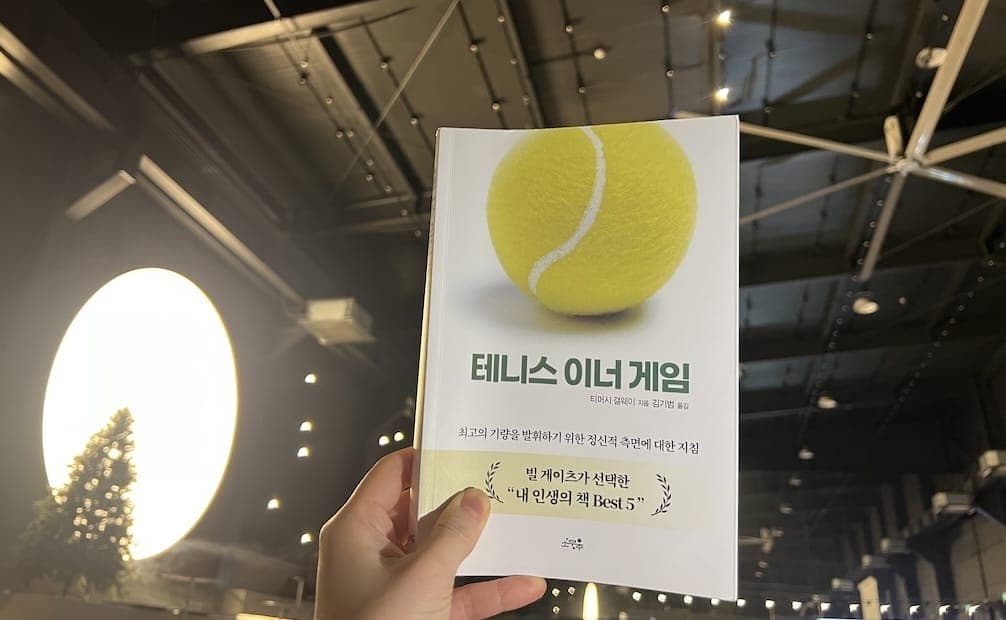
BookAs I've been getting more into tennis lately, the book <The Inner Game of Tennis> that I read about two and a half years ago came back to mind. When I first read it, I didn't know much about tennis, so I felt like I only understood about 30% of its message. Even so, the book's message about "relaxed concentration" was helpful for life in general — and with renewed passion for tennis, I was curious how differently it would resonate the second time.
 Book
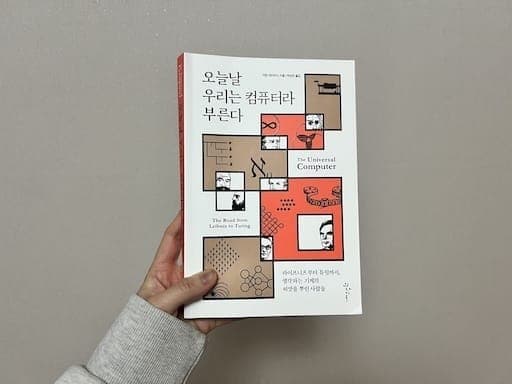
BookA channel I deeply respect recommended this book, so I bought and read it after a long time of buying books directly. I had high expectations — the recommendation came with a note that anyone interested in computers, artificial intelligence, and mathematics would find it fascinating. But honestly, I don't think I properly understood even 50% of the content. What the book left me with, though, was a much richer sense of what a computer is — not as hardware, but as an idea born from the pursuits of generations of geniuses.