 Book
Book7 min read
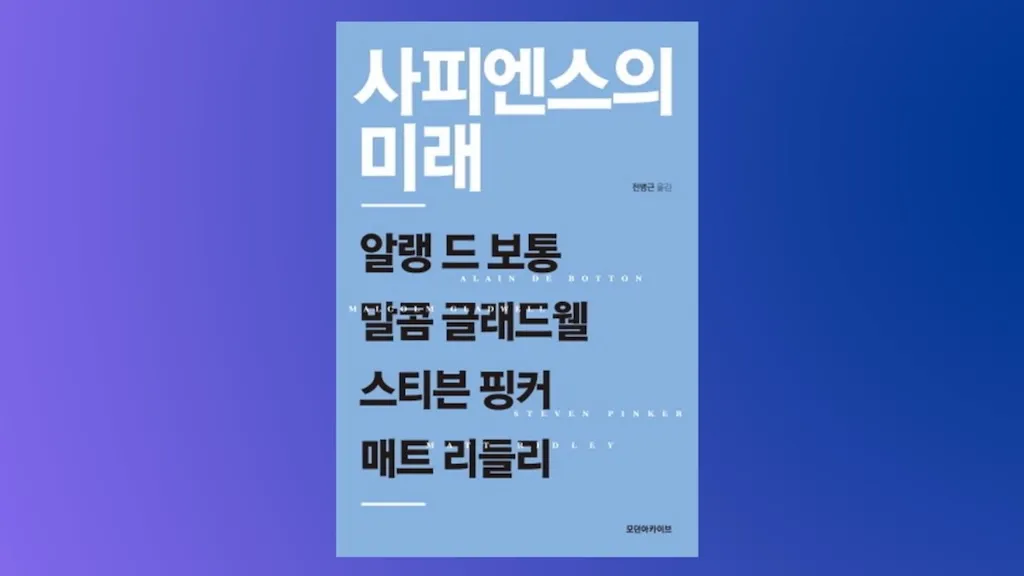
Thoughts on <DO HUMANKIND'S BEST DAYS LIE AHEAD>
amid these days so full of AI-driven FOMO, to consider what kind of future for humankind we ourselves hope for.
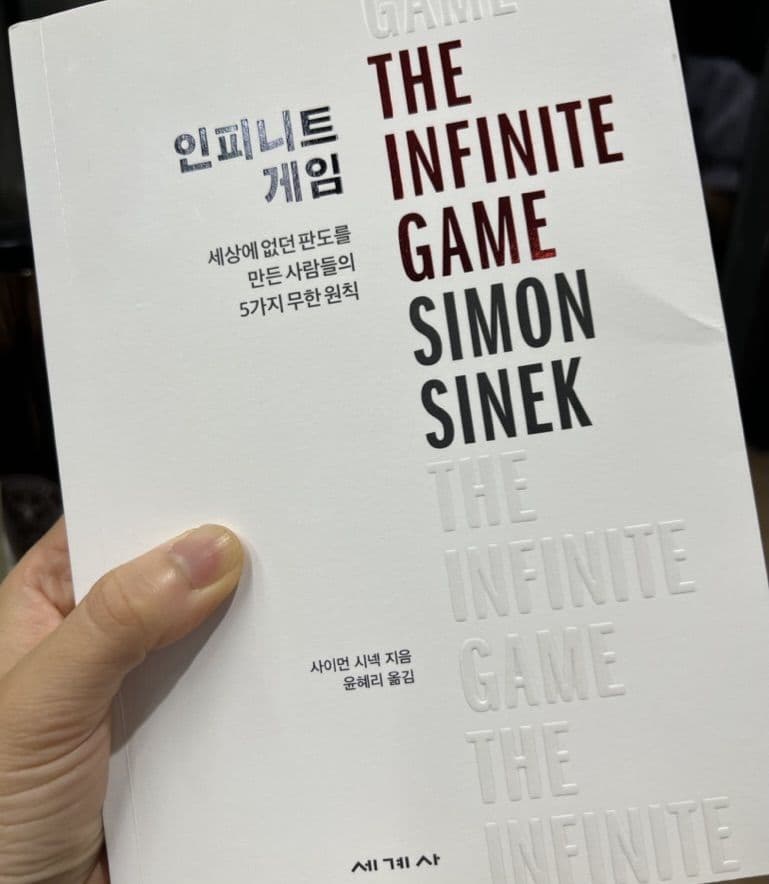
With so many books to read in the world, I end up choosing what to read based on a friend's recommendation or a compelling marketing line. came onto my radar when a friend's recommendation and marketing (Simon Sinek is a very well-known author) converged at once. And so I bought a used copy — and then let it sit on my desk for months.
In truth, I had just finished and was waiting for another finance- and cash-related book to arrive. In the meantime I picked up this book, which had been sitting on my desk. It turned out to be a happy accident: the core message of this book — "business = an infinite game" — speaks to the exact opposite side of what emphasizes about per-share value growth rates. I was fortunate to read both perspectives in quick succession and could adjust the balance of my thinking closer to center.
Before diving in, it's worth noting that Simon Sinek built his reputation as an opinion leader on leadership through works like Start with Why, Leaders Eat Last, and others — keeping this context in mind makes the book feel more naturally coherent.
The value of this book lies in helping you see business and leadership from a broad, long-term vantage point. The author delivers this perspective through the concept at the heart of the title: the "infinite game." The author's definition is as follows:
Even while playing the game, it can be hard to know all the participants, and new players can enter at any time. Each participant decides for themselves what strategy and tactics to use. There are no rules agreed upon together. There are laws, but they vary by country. Unlike finite games, business has no fixed beginning, middle, or end.
To play this infinite game well, the author says you must adopt the following mindset:
Pursue a Just Cause that makes everyone's heart beat faster
Build a Trusting Team that can rely on and support each other
Always keep a Worthy Rival nearby — one who pushes you to improve
Maintain Existential Flex — the ability to change everything except your core purpose
Show the Courage to Lead — to push forward with what you believe is right
The book is filled with examples and detailed explanations of each of these infinite-game mindsets. Honestly, if I had read this book as a CEO facing a truly desperate situation, I think I would have put it down quickly. Reading through it, many confrontational questions arose: "Have you actually tried this?" or "Aren't the examples too anecdotal?" But periodically, lines would resonate with me. And I thought: people go through times of arrogance when things are going well, and times of despair when everything falls apart — and whenever I find myself sliding too far toward the finite-game end, these ideas could offer something useful. That's how I read it to the end. Here are a few passages that resonated:
I often see senior executives suffering from what I call "finite-game burnout." They've been professionally excellent, and they've made a lot of money each time they achieved a given target, so they've kept working the same way. Then at some point, they forget the dream of dedicating themselves to something of overwhelming value, and end up mindlessly repeating assigned tasks like a squirrel or hamster on a wheel. Achieving many finite-game goals doesn't produce infinite-game results.
→ I've heard a lot lately about people — truly exceptional people who gave everything for their companies — struggling with exactly this kind of emptiness. I'd love to share these ideas with them next time we meet.
The reason to grow (not to win, but) is to acquire more resources to advance the Just Cause. Just as you don't buy a car just to fill it with gas, a company must create value beyond the accumulation of wealth. A car has value when it takes you places you couldn't go without it. In the same way, a company has value when it leads you toward a Just Cause that an individual alone could not advance.
→ In high school, I used to scribble "World's Best CEO" in the corner of every book I was studying, gave myself self-affirmations, and even kept "Best CEO Kang Min-young" as my KakaoTalk nickname for several years — memories that make me cringe now. But the pure-hearted drive behind that, and the deep motivation I had for wanting to start a company, was exactly this: that building a large company is the way to create influence at a scale and scope that no individual could achieve alone. This passage brought that feeling back to me, and I was grateful.
A leader is not someone who is responsible for the results. A leader is someone who is responsible for the people who are responsible for the results.
→ Just a few words apart, but the implied meaning is substantial.
A "lazy leader" creates new procedures without setting up support or solutions for employees. If a leader creates procedures without reading the situation correctly, ethical fading will not stop.
Immediately after the Berlin Wall fell, the United States made the greatest diplomatic mistake of the 20th century: declaring that America had "won" the Cold War. This is not true. There is no winning or losing in an infinite game — and this is as true in international politics as it is in business. The United States didn't win the Cold War. The Soviet Union, having exhausted both its willpower and resources, was simply eliminated from the game.
Very few people can make the entire transition from finite-game thinking to infinite-game thinking entirely on their own. You need to find people to do it with — people who feel a similar sense of mission, people who agree that it's time for things to change, people who are willing to take on the challenge together.
→ At the end of the day, everything is done by people. The people you surround yourself with matter enormously.
If you're expecting concrete, actionable guidance for what you should do as a leader tomorrow, this book may disappoint you. It's more the kind of book you'd be happy reading over a good cup of coffee in an empty office while your team is all away on summer vacation. For any leader feeling stuck, spinning their wheels, restless — I'd recommend giving it a read at least once.
If that doesn't fit, watching a few of Simon Sinek's videos on the infinite game online may be enough to grasp the thinking framework that distinguishes between finite and infinite games — and that alone is worth something.
Bookamid these days so full of AI-driven FOMO, to consider what kind of future for humankind we ourselves hope for.
 Book
Book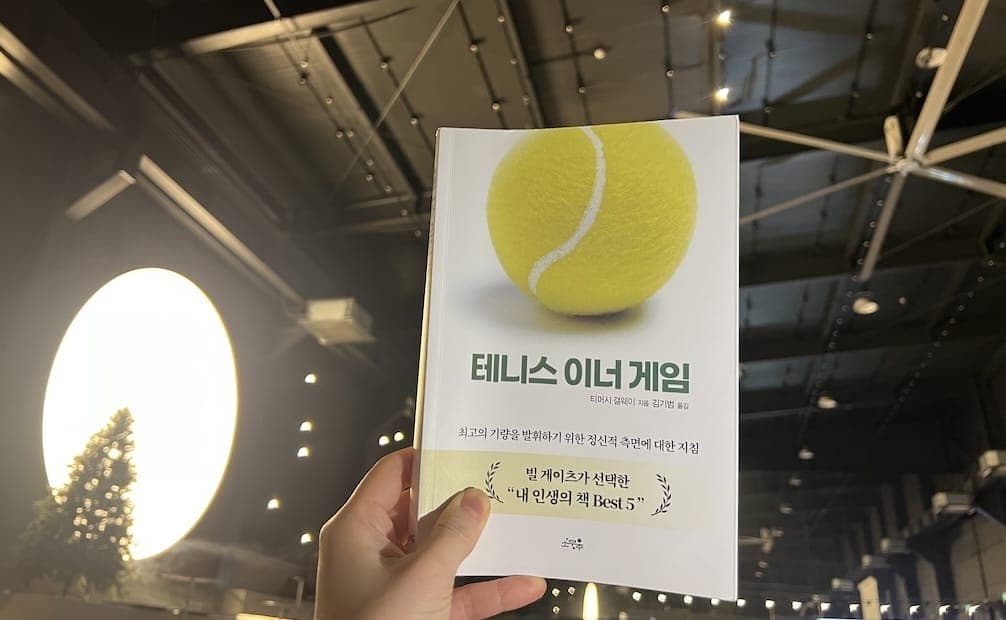 Book
BookAs I've been getting more into tennis lately, the book <The Inner Game of Tennis> that I read about two and a half years ago came back to mind. When I first read it, I didn't know much about tennis, so I felt like I only understood about 30% of its message. Even so, the book's message about "relaxed concentration" was helpful for life in general — and with renewed passion for tennis, I was curious how differently it would resonate the second time.