 Book
Book7 min read
Thoughts on <DO HUMANKIND'S BEST DAYS LIE AHEAD>
amid these days so full of AI-driven FOMO, to consider what kind of future for humankind we ourselves hope for.
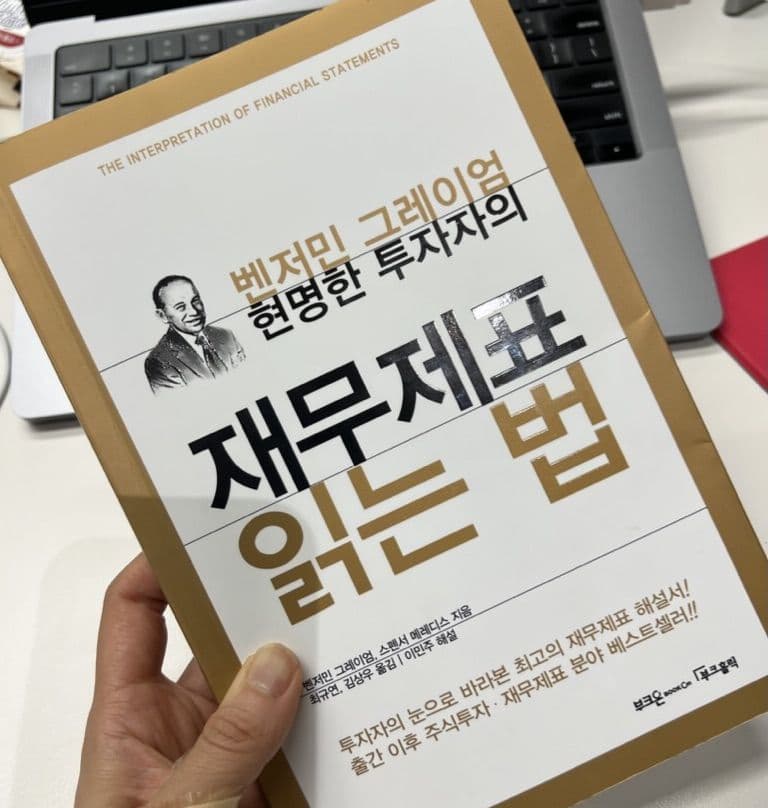
My work requires a lot of company analysis, and lately I've been strongly feeling the need to properly understand how to read financial statements. For someone who has only ever walked the so-called "science track," accounting and finance had always been something I learned piecemeal — picking up just enough concepts to get by in practice, without real foundations. I came to realize that this approach was holding me back from proactively finding data and making decisions on my own. So I searched for this book with the intention of finally, properly mastering the practical reading of financial statements — something I'd been putting off for far too long.
When the book first arrived, I was surprised by how thin it was. Benjamin Graham's other works — The Intelligent Investor and Security Analysis — run to 500–600 pages of textbook-level depth. For a moment I couldn't help but notice a lazy corner of my mind raising its head: "Could it be that because the book is this thin, Benjamin is here to tell us that studying accounting is actually unnecessary? Please let that be the case..." 🥹
What makes this book significant is that Benjamin Graham organizes the components of financial statements according to his own criteria, priorities, and flow, and delivers them to readers in a structured way. However, since the author published this in 1937, today's readers must bridge a gap of nearly 90 years. Fortunately, the Korean edition's annotator (Lee Minju) adds supplementary explanations after each chapter accessible enough for beginners — a genuine relief. (A different person from the founder of ATINUM, for the record ^^;)
Despite being thin, the book has 34 chapters — and carefully trying to understand and retain each term one by one took quite a bit of time. If you're picking this up with the same motivation as me, I'd recommend setting aside a full day where you can carve out about six hours, reading it like studying — taking notes and looking things up as you go. For those short on time who already have an accounting background, just scanning the subtitle of each chapter in the table of contents will tell you why Benjamin wrote it. Dipping into only the chapters that interest you will still be worthwhile.
Here are a few of the bigger takeaways I got from this book.
Even an investor who buys when securities appear cheap based on financial statements and sells when they appear expensive may not achieve extraordinary gains. But this investor will likewise be able to avoid extraordinary losses and frequent losses.
The more I learn about it, the more I think accounting is like English or mathematics — a tool and a language that lets stakeholders in a field communicate efficiently. Being fluent in English opens up business opportunities with English-speaking countries, but knowing English alone isn't enough to make a business succeed. I think accounting is similar. I need to make accounting and finance into tools I can use comfortably as quickly as possible. If anyone has recommendations for content that might help with that goal, I'd be very grateful.
Bookamid these days so full of AI-driven FOMO, to consider what kind of future for humankind we ourselves hope for.
 Book
Book Book
BookAs I've been getting more into tennis lately, the book <The Inner Game of Tennis> that I read about two and a half years ago came back to mind. When I first read it, I didn't know much about tennis, so I felt like I only understood about 30% of its message. Even so, the book's message about "relaxed concentration" was helpful for life in general — and with renewed passion for tennis, I was curious how differently it would resonate the second time.