 Book
Book7 min read
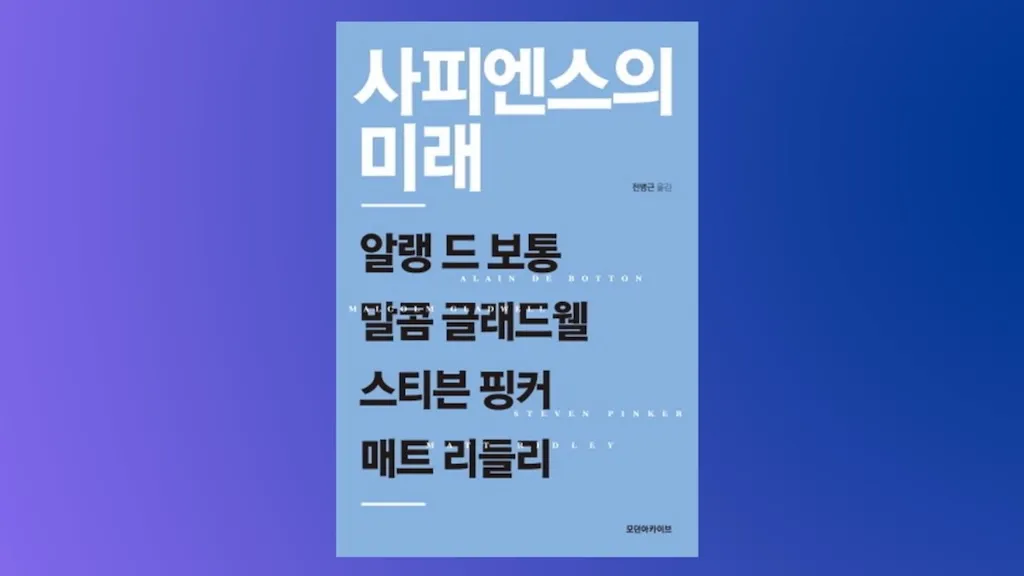
Thoughts on <DO HUMANKIND'S BEST DAYS LIE AHEAD>
amid these days so full of AI-driven FOMO, to consider what kind of future for humankind we ourselves hope for.
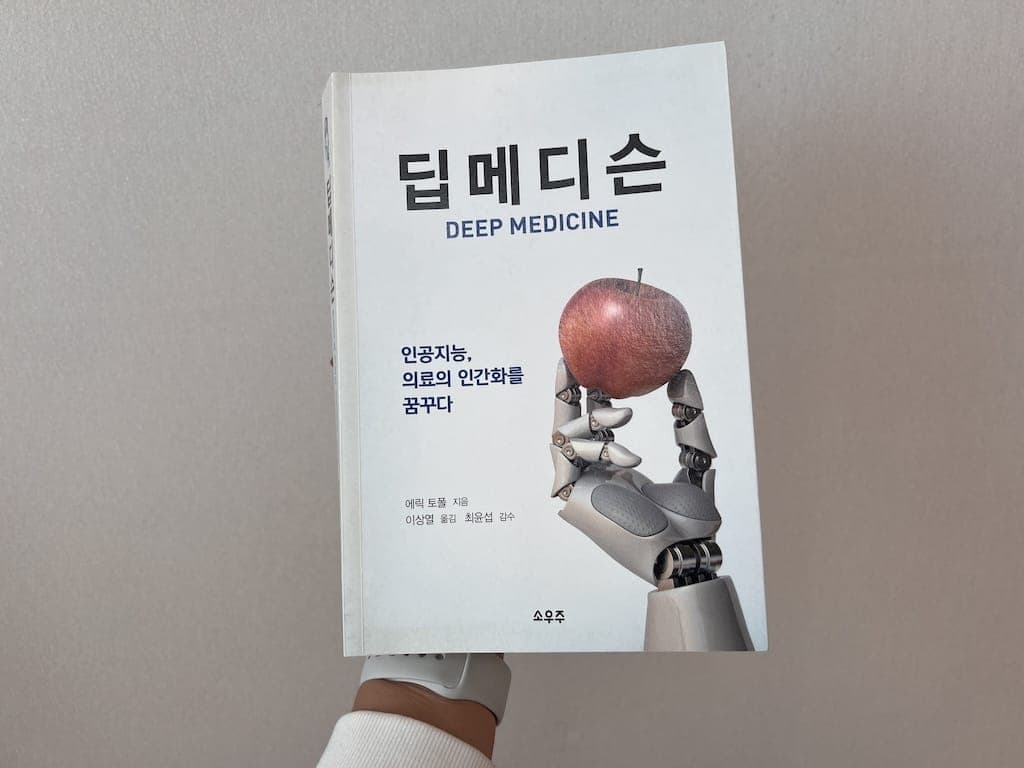
In 2020, as COVID-19 began to take hold in earnest and discussions about telemedicine and artificial intelligence were everywhere, I first learned about this book through mentions in Facebook posts from physician acquaintances. I noted it and forgot about it — then one day bought it on a whim, only to leave it on my bookshelf for over a year. When I grew interested last year in the stocks of Korean healthcare AI companies, wondering whether they were good investments, I decided to finally read it.
Before I opened the cover, I expected this book to take artificial intelligence as its subject and explain how it would radically transform medicine. But as I read further, I realized the real subject was medicine itself. In hindsight, this framing reflects the author's identity as a cardiologist and medical professional.
The author views Deep Medicine as a single overarching model composed of three "deep" components: Deep Phenotyping, Deep Learning, and Deep Empathy + Deep Connection. Deep phenotyping is the ability to comprehensively define all of an individual's medical data — encompassing medical history, social history, behavioral history, family history, biological factors, and environmental factors, to understand a person in their totality. Deep learning is a concept more familiar to most of us: it goes beyond pattern recognition and machine learning to provide guidance in medical decision-making and develops broadly as a kind of virtual medical coach. Deep Empathy and Deep Connection are what the author considers most important: the greatest benefit that AI will bring to medicine is not fewer misdiagnoses, lighter workloads, or cured cancers — it is the restoration of trust and genuine connection between patients and physicians.
The book covers a wide range of topics: technological possibilities, limitations, legal liability, healthcare systems, and medicine as healing. The area I was most curious about from the start — where AI is actually transforming medicine — includes the following. AI's future strengths are especially apparent in "pattern-type tasks."
One chapter, titled "Deep Diet," debates how nutrition science suffers from a lack of innovation and rigor. At first I wondered why a book focused on serious medical care had pivoted to dieting — but from a broader health perspective, diet is a foundational element, so the logic held. Even here, the author's emphasis falls less on the promise of AI to revolutionize nutrition, and more on how difficult it is to standardize and pattern-recognize in this field, and how urgently it demands personalization.
The final chapter is ultimately about using AI to restore humanity in medicine. The line that hit hardest was that many clinicians suffer from depression and disillusionment, and that much of this stems from the inability to perform their duties in a humanistic way. The author argues that AI can give physicians the gift of time with patients. He also introduces the less familiar concept of "presence" — genuinely listening to and empathizing with a patient's struggles, recognizing their existence, and observing them with care and precision. He describes how Yale Medical School students are actually taken to art galleries to practice reading beyond the visible — training the soft skills of deep observation. He then draws a distinction between cure and healing: "We're probably looking for something more than cure from illness. Call it healing. If you were mugged, and the next day the criminal was caught and everything was returned — you still wouldn't feel fully recovered. You were cured, but not healed. The psychological wounds remain."
In closing, the author says we are still in the early days of medical AI — and envisions it not as a replacement for physicians but as a tool that helps them reclaim their humanity. He leaves us with conditions that must be met for humanity to truly benefit: "Individuals must own and control their own medical data; physicians must actively persuade administrators who would sacrifice human connection for productivity; and strict measures to ensure data privacy and security must be in place." Each of these conditions is, in itself, a challenge of iceberg proportions — entangling the interests of multiple stakeholders — and I found myself skeptical, and slightly dispirited, about whether humanity can actually work through them.
This book was published in 2020, yet reading it in 2024 felt barely different. That alone reminded me how far medical AI still has to go. But on the positive side: the direction medical AI must travel is clear, and this book — written from the perspective of a clinician — makes a compelling case for how to carry others along on that journey.
This was another book that left me with a different understanding after closing it than before opening it. That's one of reading's great charms. After finishing, Deep Medicine feels like a warmer concept than before. I had been viewing AI primarily through the lens of work efficiency, focused on which functions and roles it would directly replace. Thanks to this book, I found myself, surprisingly and gratefully, paying more attention to the humanity that AI might help us recover.
When AI takes over the capabilities it does better — latest medical knowledge, integrating vast data, processing power — physicians won't be having their work stolen. They'll be doing more of what only a human clinician can uniquely do. I found that argument genuinely moving.
Korea, too, has been turbulent over the past year with the physicians' strike and debates over medical school enrollment. While every stakeholder insists their claim is most urgent, it made me wonder: could we introduce a completely unrelated third party — artificial intelligence — and find a win-win strategy that no one has yet been able to see? As someone who isn't a direct stakeholder, I found myself thinking about it.
Looking only at this book's cover and title, it seemed like it would be as dense as a research paper — which is why I kept putting it off. But now I believe it has a meaningful message for doctors, patients, engineers, and policymakers alike: what does medicine that "heals" rather than merely "cures" actually look like — and what does it mean for each of us as human beings?
The final passage that moved me most: "If you have experienced deep suffering, you understand how lonely and isolating it feels — why no one else seems to grasp your anger and despair. In those moments, there is nothing better than a doctor you trust — one who reassures you that the pain will pass and who pledges to be with you no matter what."
Bookamid these days so full of AI-driven FOMO, to consider what kind of future for humankind we ourselves hope for.
 Book
Book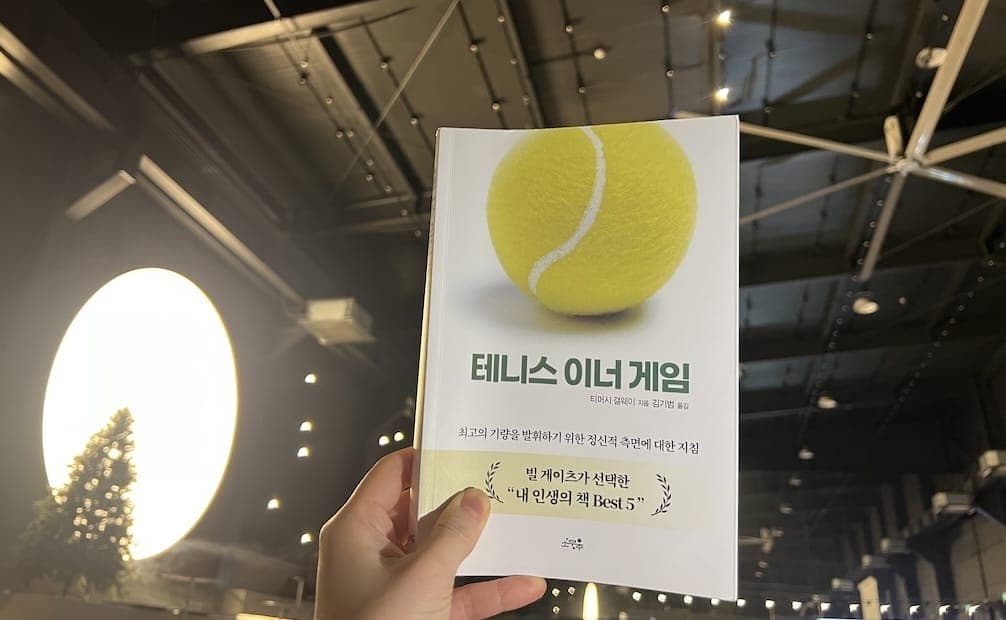 Book
BookAs I've been getting more into tennis lately, the book <The Inner Game of Tennis> that I read about two and a half years ago came back to mind. When I first read it, I didn't know much about tennis, so I felt like I only understood about 30% of its message. Even so, the book's message about "relaxed concentration" was helpful for life in general — and with renewed passion for tennis, I was curious how differently it would resonate the second time.