 Book
Book7 min read
Thoughts on <DO HUMANKIND'S BEST DAYS LIE AHEAD>
amid these days so full of AI-driven FOMO, to consider what kind of future for humankind we ourselves hope for.
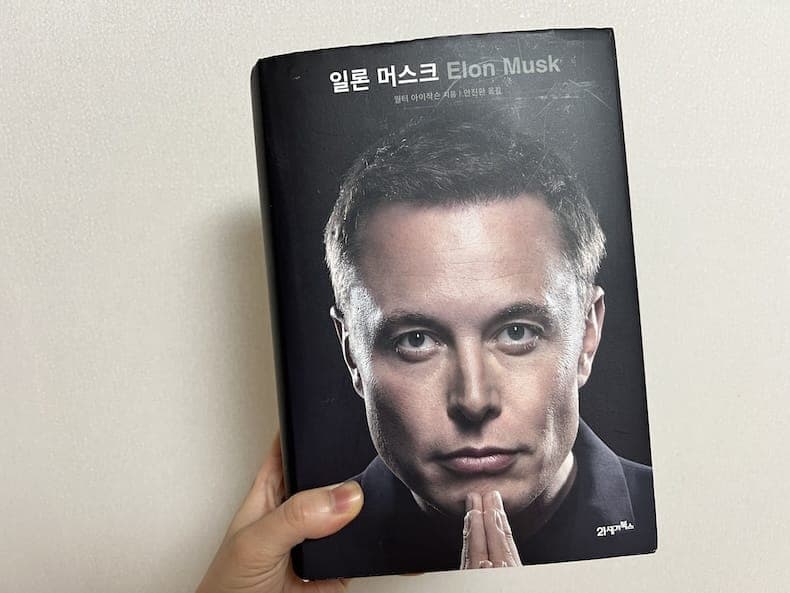
If you were to name the book that became a sensation the moment it was published last year, would undoubtedly top the list. Many people around me were reading it after publication, and with constant news about Elon Musk through X.com (formerly Twitter), Tesla, SpaceX, Dogecoin, and more, it sat at the very top of my reading list. I wanted to finish it before the year was out, but other things got in the way, and I ended up finishing it in the new year. (And then the blog post took another month after that 🥹)
Because this is a biography of someone who is still alive and active, there's a unique experience you can't get from ordinary biographies: encountering news about Elon Musk even while reading the book. In particular, the very week I closed the last page of , SpaceX's Starship (a reusable super-heavy launch vehicle) had its third launch and achieved a partial success. Since the final chapters of the book also revolve heavily around SpaceX, I found myself smiling at the amusing confusion of not knowing whether I was still reading the book or catching up on real news.
This reading experience itself was novel — and is not the kind of book you read to acquire knowledge. It takes the image of Elon Musk that most of us have assembled from news snippets and isolated events, and connects them into one grand narrative: from his family background to the pivotal choices and coincidences of his life. In that sense, you can glimpse the remarkable narrative craft of Walter Isaacson, the veteran biographer.
Unexpectedly, this book was a source of motivation for me. From the mental anguish Elon suffered at his father's hands as a child, to the death of his firstborn, to the dramatic last-minute investment from acquaintances when Tesla had only months left to survive, the repeated failures of SpaceX rocket launches, the acquisition of Twitter — just reading about these moments makes your chest tighten, and there were many points where I thought: if I were in that situation, I couldn't handle it. Every time I read these stories, what became increasingly clear in my mind was: whatever I'm dealing with — whether it's a busy workload or mental and physical exhaustion — it's really nothing compared to what Elon manages. Fortunately for me, that impression made difficult situations feel a little more manageable, and the perspective that created became a driver to do better. So I'd like to categorize this book as a "motivational book" 😉
If you've ever wanted to understand Elon Musk as a person, I'd highly recommend reading this book. Here are some of the descriptions from the book of what kind of "human" Elon Musk is. The way we usually encounter Elon Musk is through news about his companies, stock prices, and scandals. If those pieces of news are the broad dots, then this book lets you connect those dots into a story and understand why a person like this came to be. In that sense, it's also a book of humanities — giving us a chance to understand a new type of human.
I think a significant part of how Elon motivates people lies in the deep technical understanding and sharpness he occasionally reveals.
Musk has the ability to warp reality and pull people into his vision.
What I noticed is that Elon starts with a mission and later figures out how to make it financially successful.
He felt that human life should not be limited to simply solving problems. It should also be about pursuing great dreams.
He believed that if you're not willing to invest in the company, you don't deserve to be a founder. "To be a co-founder, you need some combination of inspiration, sweat, and risk."
He repeatedly instructed employees to treat every requirement as a recommendation.
Musk insisted on unrealistic timelines even when there was no particular need to. His colleagues called this a "reality distortion field."
Camaraderie was beyond his abilities, and respect was not in his nature. He did not like sharing power.
He's as willful and strong as a bear. He'll joke around and play with you, but eventually you realize you're still dealing with a bear.
I didn't want to be left out of the spectacle of millions of dollars that was my husband's life. I was angry at Elon because he had shut me out.
He proposed a timeline with almost no basis in reality — launch a fourth rocket in six weeks — and just told us to keep going. I was speechless. That optimism permeated the whole headquarters, and watching his attitude, most of us felt ready to follow him into the gates of hell with sunscreen in hand.
In the fall of 2008, as (Tesla's) situation became increasingly desperate, Musk begged friends and family for money to cover employee salaries.
(During Musk's hardest times) He suffered from night terrors. He would suddenly scream in his sleep, scratch me, and things like that. Sometimes when he went to the bathroom to vomit, I would stand by the toilet and hold his head.
As things got harder at SpaceX and Tesla, the more people pressured him to choose, the more he resisted. "Emotionally, it felt like I had two children and not enough food. If I gave half the food to each, both might die. If I gave all the food to one, at least that one would have a higher chance of surviving. But could I really make the decision to let one of my children die? So I decided to give everything to save them both."
Musk's emotional settings oscillate between aloofness, yearning for affection, and cheerfulness.
After breaking up with Amber Heard and being shocked by the news that his father had a child with his stepdaughter, Musk went through a period of cycling between depression, disorientation, dizziness, and mania. His mood would plummet to extremes at times, leaving him in something close to a catatonic stupor or depressive paralysis. From the summer of 2017 through the fall of 2018, both professionally and emotionally, it was the most brutal period of his life — harder even than the 2008 crisis.
"Trying to be kind to employees who are underperforming is actually inconsiderate to the dozens of other employees who are doing their jobs well. If I don't fix the problem, it harms many other hardworking employees."
Musk estimated that on a good day he makes about 100 command decisions while walking the floor. "At least 20% of them will turn out to be wrong, and then we'll come back and fix them later. But if I don't make decisions, we die."
Musk's five commandments (the Algorithm):
- Question every requirement.
- Delete any part or process you can — whether components or procedures.
- Simplify and optimize.
- Accelerate cycle time.
- Automate.
I understood that his anxiety is what drives his success. His demon mode causes a lot of chaos. But it also gets the goals accomplished.
One of his ways of escaping during difficult times is to focus on future projects.
I first learned about Elon Musk when I was in college, and at the time I thought I wanted to become an entrepreneur like him. Since then, as I've followed more news about him — and now, through this book, looked more closely at his life — that desire to live a life like his has faded. Reading this book made me feel the pain beneath the surface far more vividly. But I think the fact that someone with a dream and mission powerful enough to consume themselves entirely exists in our society is a net benefit to humanity as a whole. I think this will become a book I return to whenever I need to pull myself together during hard times.
Bookamid these days so full of AI-driven FOMO, to consider what kind of future for humankind we ourselves hope for.
 Book
Book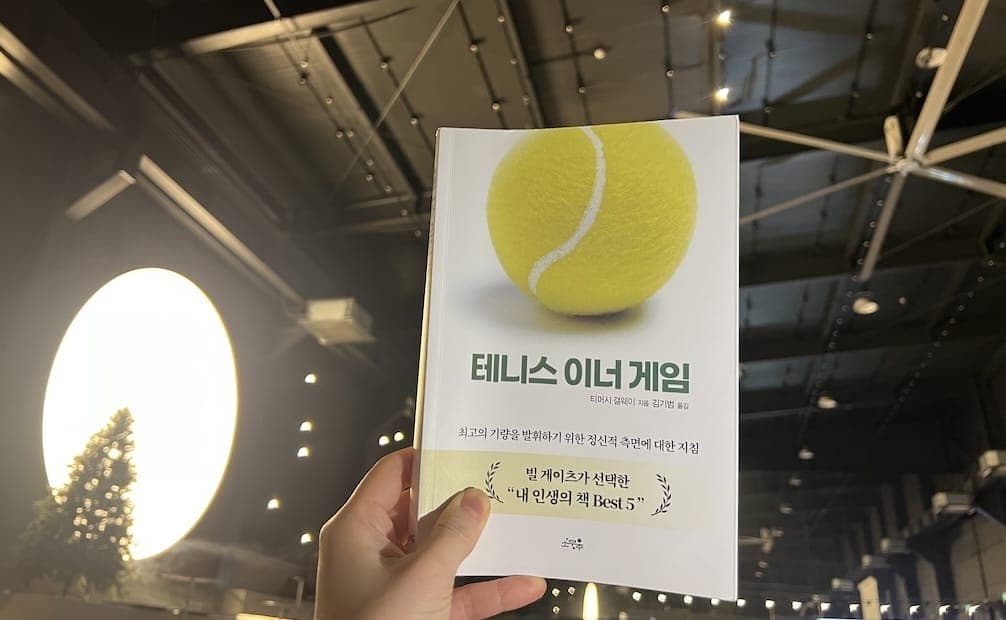 Book
BookAs I've been getting more into tennis lately, the book <The Inner Game of Tennis> that I read about two and a half years ago came back to mind. When I first read it, I didn't know much about tennis, so I felt like I only understood about 30% of its message. Even so, the book's message about "relaxed concentration" was helpful for life in general — and with renewed passion for tennis, I was curious how differently it would resonate the second time.