 Business
16 min read
#8 Are the Print Shops in Chungmuro Making Money?
I wanted to understand why Chungmuro has so many print shops.
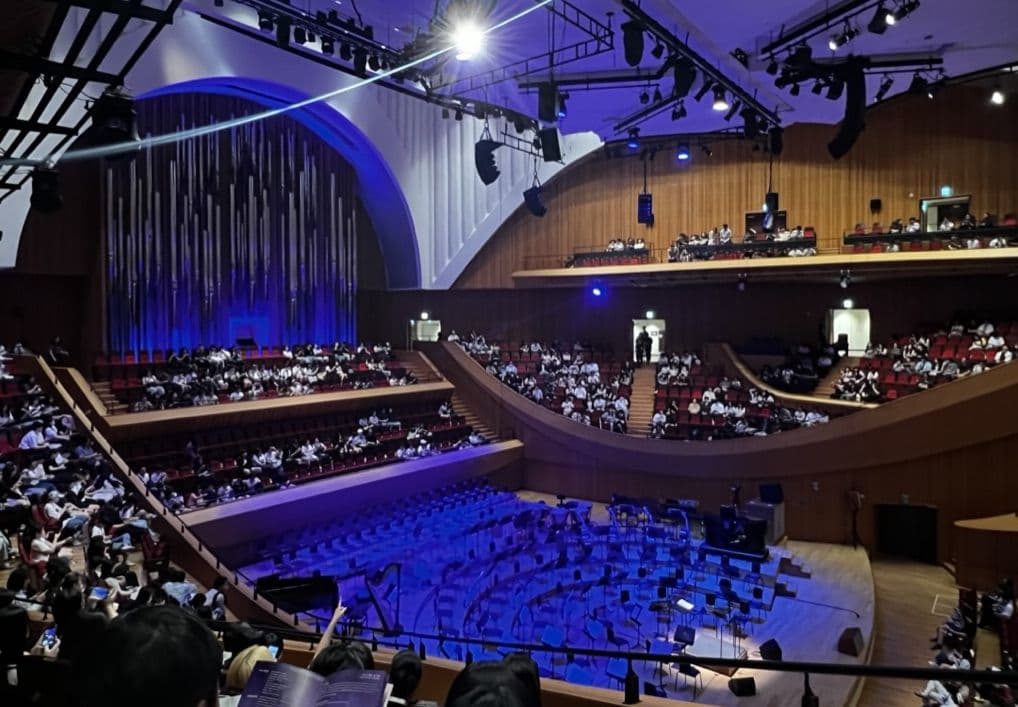
By chance, I recently attended a production of the musical Chicago, the play Delivery, and the concert Suzume's Locking Up & Your Name & Weathering With You Film Music Concert. The classical concert in particular was organized by a production company called "Ttomo," which arranged Makoto Shinkai's film OSTs as full orchestral pieces. The two-hour runtime felt completely full, and the program was so well crafted that not a moment felt dull — it was genuinely moving. At the time I also noticed, just by looking around, that Lotte Concert Hall was over 90% full, with most of the audience appearing to be in their 20s and 30s. Seeing this, I became curious: from the perspective of a concert organizer who successfully programs and stages one timely production like this, what does the revenue structure actually look like?
The key determinant of a classical concert hall's quality is reverberation time (a reverberation time of 1.9 to 2 seconds at 500 Hz is recommended). The top five venues in Korea by reverberation time are as follows:
You might wonder why the large Sejong Center Grand Theater or Goyang Aram Nuri Opera House aren't on this list — they simply didn't make the top five for reverberation time, and both are likely to undergo renovation to improve in this area. Since this post focuses on orchestral classical concerts, most of my data comes from the Seoul Arts Center and Lotte Concert Hall.
While preparing this post, there were many moments of "Wait, this exists?!" that broadened my knowledge in unexpected ways. One such discovery was the Korea Performing Arts Box Office Information System (KOPIS), operated by the Korea Arts Management Service under the Ministry of Culture, Sports and Tourism. The genres covered by KOPIS include theater, musicals, classical music, traditional Korean music, popular music, dance, popular dance, and circus/magic. In 2022, performing arts ticket sales totaled approximately 550 billion KRW across 16,289 productions. By genre, musicals account for about 76% of total ticket revenue, driving the entire performing arts market. I had assumed popular music concerts would have the largest share given how often I see news about them — learning it was musicals came as a surprise.
Looking through articles about KOPIS, I found the reason behind the creation of this integrated ticketing system quite interesting. When we book performances, most of us go through major ticketing platforms like Interpark, Yes24, Ticket Link, or 11st. These platforms earn booking fees from audience members and sales agency fees from producers, building a powerful business model that positions them as indispensable gateways everyone must pass through — a great example of a gateway business. As this structure intensified, the growth benefits of the performing arts market were being absorbed more by the ticketing platforms than distributed among performers, organizers, and audiences. In response, major venues like Seoul Arts Center, LG Arts Center, Lotte Concert Hall, and Sejong Center developed their own ticketing systems that charge no sales or booking fees. And at the national level, KOPIS has been operated since 2014 to integrate government, public, and private ticketing platforms. In its early days, it was reported that dominant platforms like Interpark had no reason to cooperate with KOPIS and didn't share detailed ticketing data. Now, looking at KOPIS again, it appears that since 2019, Article 4 of the Performance Act (Performing Arts Integrated Computer Network) has required that performance booking information be mandatorily linked to the KOPIS system. I found it fascinating to observe this as a case study of how imbalances within a single ecosystem are addressed through checks and countermeasures over time.
Following the same curiosity that inspired this post, I want to look at from the perspective of a concert organizer: how much is earned and how much does it cost to stage a performance?
Revenue from a performance is simply ticket sales — that's it. Of course there are cases like corporate-sponsored concerts or sponsorship deals, but here I'm looking at the typical scenario.
For ticket sales, we need to look at the paid seat occupancy rate. While there are no precise statistics, based on the following highlights, I assumed a paid seat occupancy rate of 50% as a typical figure.
Relevant highlights for estimating paid seat occupancy:
Beyond occupancy, ticket prices must be considered. KOPIS lists an average classical ticket price of 30,000 KRW, but this blends very different types of events — corporate-sponsored, charity, and graduation performances — so I calculated it a different way. In the production I attended, the pricing tiers were: R-class 130,000 KRW, S-class 100,000 KRW, A-class 70,000 KRW, B-class 50,000 KRW — which I took to be within the typical range. One interesting fact I discovered: venues don't pre-assign which seats are R, S, or A-class. Instead, when applying for a venue rental, the organizer proposes how many tiers to use and which sections/how many seats to assign to each tier. That said, the Seoul Arts Center Concert Hall does cap the maximum number of seats per tier: R-class 869 seats, S-class 745 seats, A-class 517 seats, B-class 334 seats. From an organizer's perspective, you'd want to maximize higher-priced tiers, but since there are caps, I assumed they'd price right up to those maximums.
As a concert organizer putting on a show at Seoul Arts Center, I could expect the following revenue:
Unlike revenue, costs had many line items to consider. All purchase items below reflect prices exclusive of VAT.
Adding up all seven cost categories gives a total cost of 70.07 million KRW. With revenue of 97 million KRW and costs of 70 million KRW, net profit of approximately 27 million KRW remains. Variables that could change this outcome include conductor and soloist fees, advertising costs, insurance, and contingency reserves.
After running these numbers, the revenue model seems more rational than the vague sense I had when first getting curious — that the arts world probably doesn't generate much profit. For a production like the one I attended — competing on creative programming rather than star performers — a net profit of around 30 million KRW per show seems achievable. Running the same themed production across at least three venues could create a structure capable of covering the fixed costs of an event production company.
This post focused narrowly on comparing revenue and cost figures. If I were actually planning this business, I'd need to go further and model cash flow by period — when costs go out, when revenue is collected, and when tax payments and refunds occur.
This post started from curiosity about whether a profit-making structure exists. But by the end, I've developed a somewhat more concrete picture of how classical concerts might evolve going forward. Classical concerts can differentiate in two ways: (1) by featuring world-class conductors or performers, or (2) by repackaging existing music or content into original programmatic productions. The first type of competitive edge is best captured by established production companies with deep industry networks built over many years. If I were starting a new production company, I'd focus on building the second type — programming creative shows that resonate with the target audience, building a track record of successes, and then gradually working toward the first type as well.
From now on, every time I attend a classical concert, I expect the information and insights from writing this post will surface in my mind, making the experience even more interesting. I hope readers of this post can have a similar experience. 🎻🎷🎺🎹🥁
BusinessI wanted to understand why Chungmuro has so many print shops.
 Business
Disclaimer: Based on a presentation delivered at the Seoul National University blockchain club Decipher's Weekly Session on the topic 'The Future of Banking.' This article explores the new forms of banking that can emerge when 'banking as a business model' meets 'blockchain as a new technology,' and examines the changes underway. Nothing in this report constitutes investment advice.
 Business
September turned out to be even more of a whirlwind than I expected, but as it drew to a close I sat back down to write. I knew if I let the month end without posting at least one Money Machine piece, I'd regret it when I looked back at my monthly post counts later.