 Book
Book7 min read
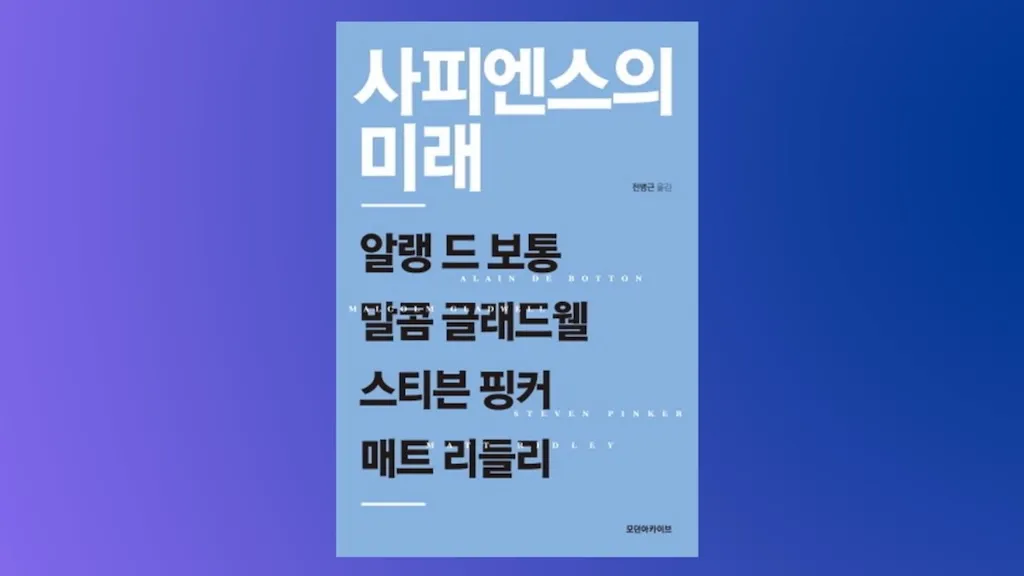
Thoughts on <DO HUMANKIND'S BEST DAYS LIE AHEAD>
amid these days so full of AI-driven FOMO, to consider what kind of future for humankind we ourselves hope for.
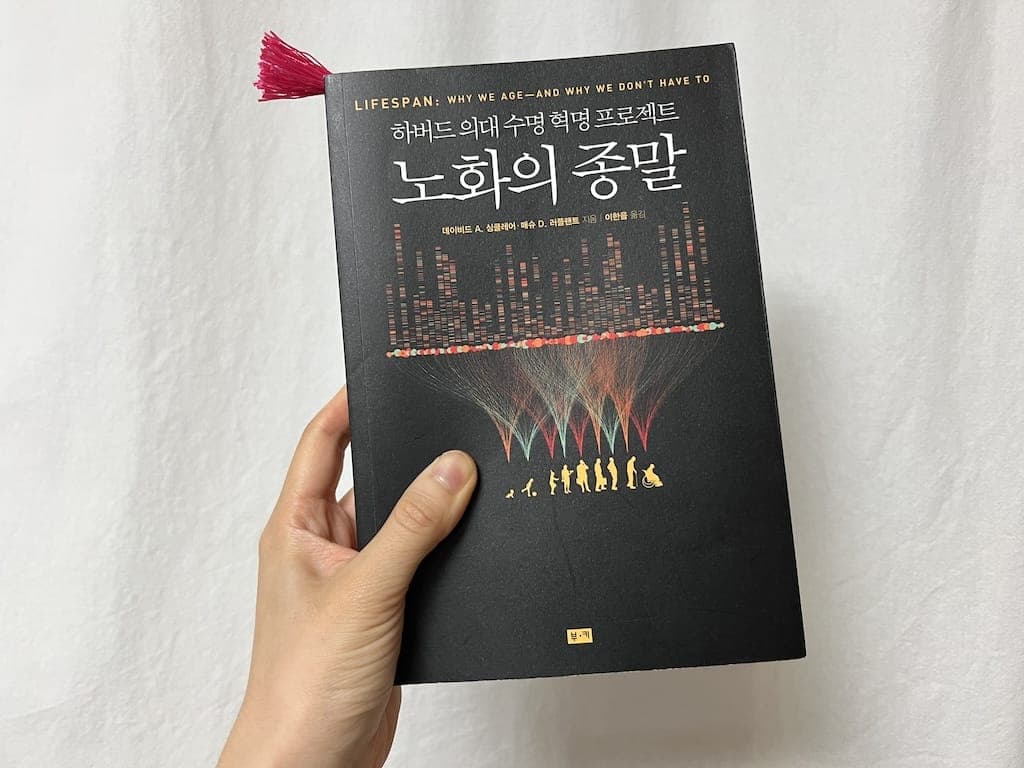
I occasionally feel that my stamina and health are different from my early twenties — and above all, I increasingly think that working hard for freedom is pointless if you lose your health while getting there. So my thoughts about what to look after for health have become more serious over time. Recently, while wondering whether there was something I could do to bring my fitness up another level beyond my current exercise and regular routine, I asked a friend who is far ahead of me in health and joyful living what supplements he was taking — and that's how I came to learn about Professor David Sinclair. Searching online, I found he was already well known, with his daily routine and supplement regimen widely posted. So I mindlessly added the supplements he reportedly takes to my online cart — and just before hitting checkout, I thought: "If I start taking these, I might be taking them for decades. Let me learn a little more about why this person takes them first." At that moment, Professor Sinclair's book caught my eye, and I resolved to read it completely before deciding whether I still wanted the supplements.
Honestly, since I came to this book through my focus on David Sinclair, the title Lifespan didn't feel that shocking to me. But I do remember a friend noticing the book on my desk and being puzzled — why was someone so young already interested in "aging"? As that friend's question illustrates, we tend to view aging as something every human inevitably goes through, not worth worrying about until it arrives. What was fresh about this book is that the author sees this attitude as the problem, and strongly argues that aging is a disease. In the early 1900s, cancer was something that couldn't be cured — a fearful fate to be accepted. But once the causes of cancer were identified, it became a treatable disease — by eliminating underlying causes or through targeted therapy. The author says research in his lab has identified the causes of aging. Just as with cancer: once the causes of aging are identified, aging can be viewed not as an inevitable fate but as a solvable problem. So the author treats aging as a disease and advocates various substances and lifestyle changes that can slow or reverse it. Safety validation sufficient for broad public acceptance is still ongoing, but he says he's already demonstrating through himself and people around him that "a person in their fifties can live as vigorously as someone in their thirties."
As a professor, the author explains the causes of aging in great detail. While absorbed in the book, I felt the connections clicking into place — but now the difficult terminology and causal chains are fading. Still, the key message that stayed with me is: "aging results from the loss of information." We are made of cells; as cells divide, the things our body needs are created, and abnormal division gives rise to tumors or cancer. Cells also disappear as they die. Cells divide and grow as DNA replicates — and DNA can be thought of as "digital information" code made up of four nucleobases. DNA is familiar from biology class, but the book argues that another type of information — "analog information" — is the heart of the aging mechanism. This analog information is the epigenome: the manager that instructs DNA, cells, and enzymes on their roles and turns switches on and off based on the body's state and environment. The epigenome initially functions correctly — but as we live, our DNA breaks frequently. Each of our 46 chromosomes can break in some way every time a cell replicates, totaling over 2 trillion breaks per day across the body. Natural radiation, environmental chemicals, X-rays, and CT scans can also break DNA. Our bodies respond through epigenomic repair — but when breaks become too frequent, the epigenome is so occupied with repair that it can no longer properly direct normal cell expression. As a result, cells divide at the wrong time into the wrong type — and that is the cause of aging.
The latter half of the book also examines whether "longevity" or the "end of aging" is purely good for humanity — from moral and social perspectives. I had personally just accepted longevity as good, thinking only of myself — but it was fascinating to see that experts in this field are actively fighting counterarguments. A few of the author's responses resonated strongly:
At the very end, the author cautiously shares what he and his family are doing for their health, with the caveat that none of it is completely validated and there is no obligation to follow it:
As always, reading's charm is discovering something more than what you expected when you opened the book. I came to this book simply to gain confidence about which supplements to take — but finished it having gained much more: a new way to view aging, and a more persuasive vocabulary for talking to people around me about healthy eating, exercise, and supplements. I plan to try a few of the supplements the author takes. If they give me more vitality, I'd love to recommend them to the people I care about — so we can all live a long, joyful, and abundant life together. Even a small but meaningful influence from me would be something I'd treasure.
For anyone who wants to examine the genetic approach to aging in depth and find things worth applying to their own life — for whatever reason — I recommend reading this book at least once.
Bookamid these days so full of AI-driven FOMO, to consider what kind of future for humankind we ourselves hope for.
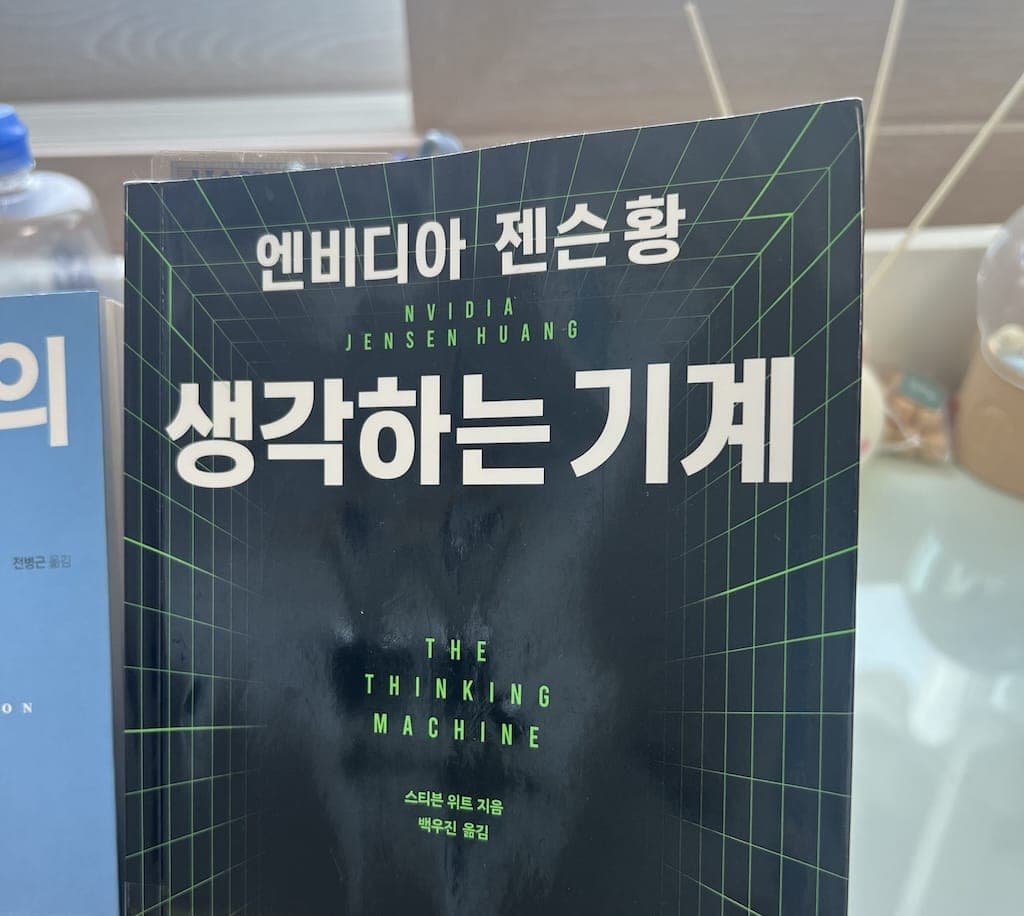 Book
Book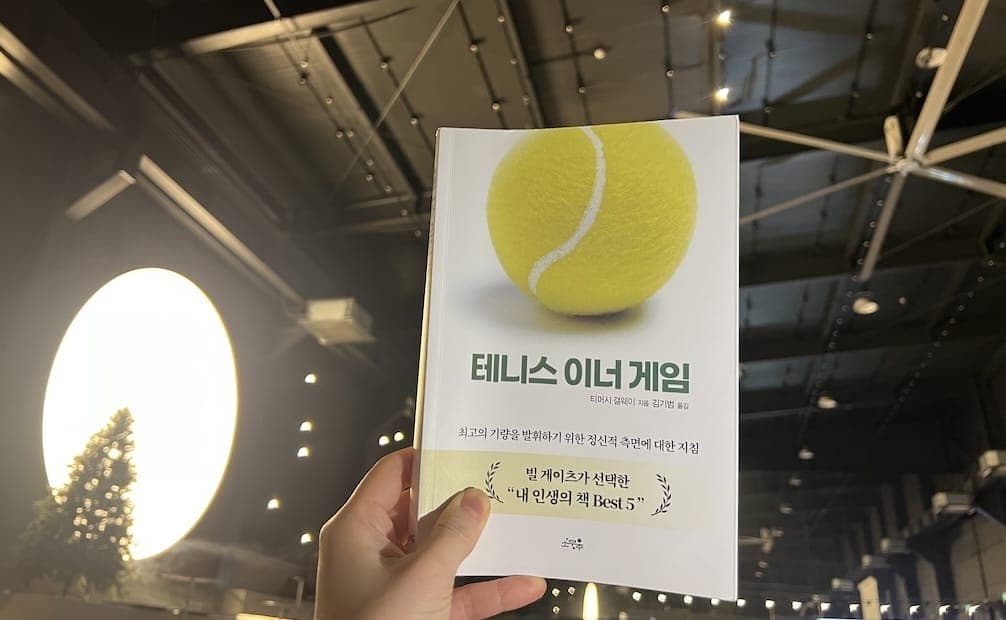 Book
BookAs I've been getting more into tennis lately, the book <The Inner Game of Tennis> that I read about two and a half years ago came back to mind. When I first read it, I didn't know much about tennis, so I felt like I only understood about 30% of its message. Even so, the book's message about "relaxed concentration" was helpful for life in general — and with renewed passion for tennis, I was curious how differently it would resonate the second time.