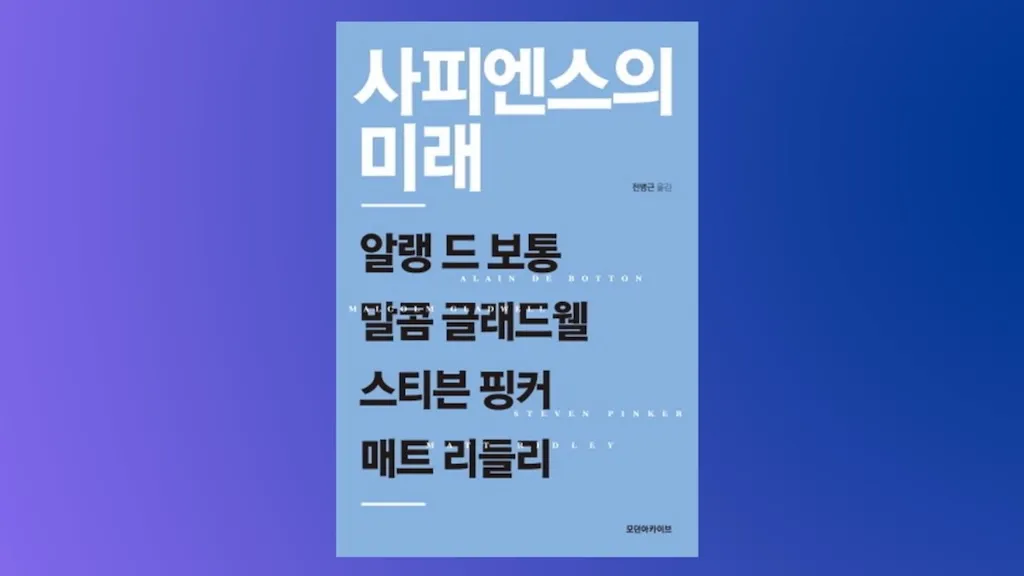
 Book
Book7 min read
Thoughts on <DO HUMANKIND'S BEST DAYS LIE AHEAD>
amid these days so full of AI-driven FOMO, to consider what kind of future for humankind we ourselves hope for.
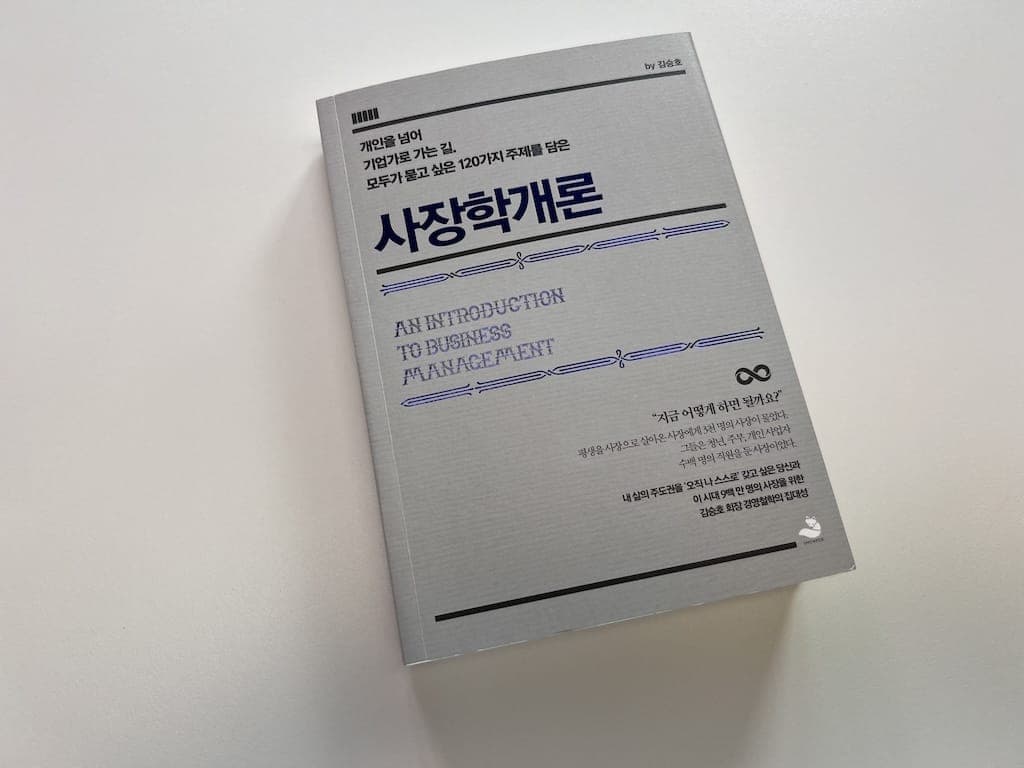
I enjoy both giving and receiving books as gifts. A friend gave me this one as a birthday present, and I happily read it. It was a hot summer vacation season, but the book's crisp and breezy writing style let me enjoy reading for the first time in a while. (The fact that the previous book I'd read was particularly heavy probably made me feel this even more.)
Personally, I enjoy self-help books written by people who have succeeded in business. The period when I was most positively influenced by self-help books was in high school. Books I read then — Lee Kun-hee at 27, CEO Ahn Cheol-soo: A Battle with Soul, Hillary's Story, The Dream-Dreaming Attic — still stand out in my memory. The only thing I regret is that I can't find the book reports I wrote about them — I'd love to read those now.
Like those books, this one was written by Chairman Kim Seung-ho — a CEO who trains other CEOs. He has published many books about money, but this one, focused purely on business and packed with vivid, practical advice, was a more welcome read for me. While reading it, I also discovered that he runs his own publishing company as a business — which reinforced my impression of him as an entrepreneur from head to toe.
As the author himself says, reading this book won't make you a successful CEO or guarantee business success. And as you read, you'll find that much of it is advice you've heard somewhere before. But that's precisely why it's hard to actually practice and execute on. For that reason, this seems like a good book to keep nearby — returning to the underlined passages whenever you have time, to re-center yourself.
Through various recent experiences, I've come to believe that simply raising a lot of capital and founding a flashy startup is meaningless. The kind of company I now want to build is a small but substantial organization: one that can pay its employees reliably, gives people the sense of achievement that comes from meaningful work, and creates economic value for society. Thinking this way, what I used to call "startup" in my youth has become "business" — and figuring out which business to start feels even more daunting. Building something real, rather than something that merely looks good, is clearly much harder. Facing the real game makes me feel fear, and I find my willpower fluctuating day to day. So I sometimes feel a bittersweet pang: I'm more mature than I was when I had big dreams and wanted to do everything, but also less romantic.
And yet this book gave me energy — the sense that the understanding of "business" I've developed through experience is heading in the right direction, and that all I need now is to put in more effort. It also made me imagine more vividly the freedom, choices, and generosity I could offer to the people around me when I've built a business that truly succeeds — and it made me want that more.
Every chapter of this book has a theme and delivers its message concisely. Rather than summarizing every underlined passage, I'll share the only section I dog-eared the page on.
Don't let words pass through you without weight; keep your mouth closed.
A loose mouth blocks incoming luck and invites misfortune.
Act to benefit others, then never brag about it.
Kindness that can't be repaid becomes luck.
Think of yourself as a lucky person.
Even luck likes good people.
Don't fear new things.
Luck always appears as new work, new people, new gatherings.
Don't turn away those who come to you.
Luck rides on someone's back.
Be an optimist.
A positive perspective reverses even bad things.
Be someone else's luck.
They will be yours in return.
Open the window and let in the sunlight.
Luck comes with the light.
Discard old things you no longer need.
Old objects drain vitality and hold luck back.
Luck is skill.
Raise your skill level and the probability goes up.
Wash your face and keep your hair neat.
Luck is disappointed when it arrives to find a mess.
Let the other person speak — not you.
Only then will luck give you a turn to speak.
If you're an adult, close your mouth and open your wallet.
Luck is always young and doesn't like those who talk a lot with a closed wallet.
Read at least 24 books a year.
Read just two a month and blessings you couldn't see will come into view.
That was supposed to be 15, but one is missing. The last:
Rather than saying more about this book's conclusion, I think I should just act on it. I'll use the energy I gained from this book to take the first step toward a good business right now.
Bookamid these days so full of AI-driven FOMO, to consider what kind of future for humankind we ourselves hope for.
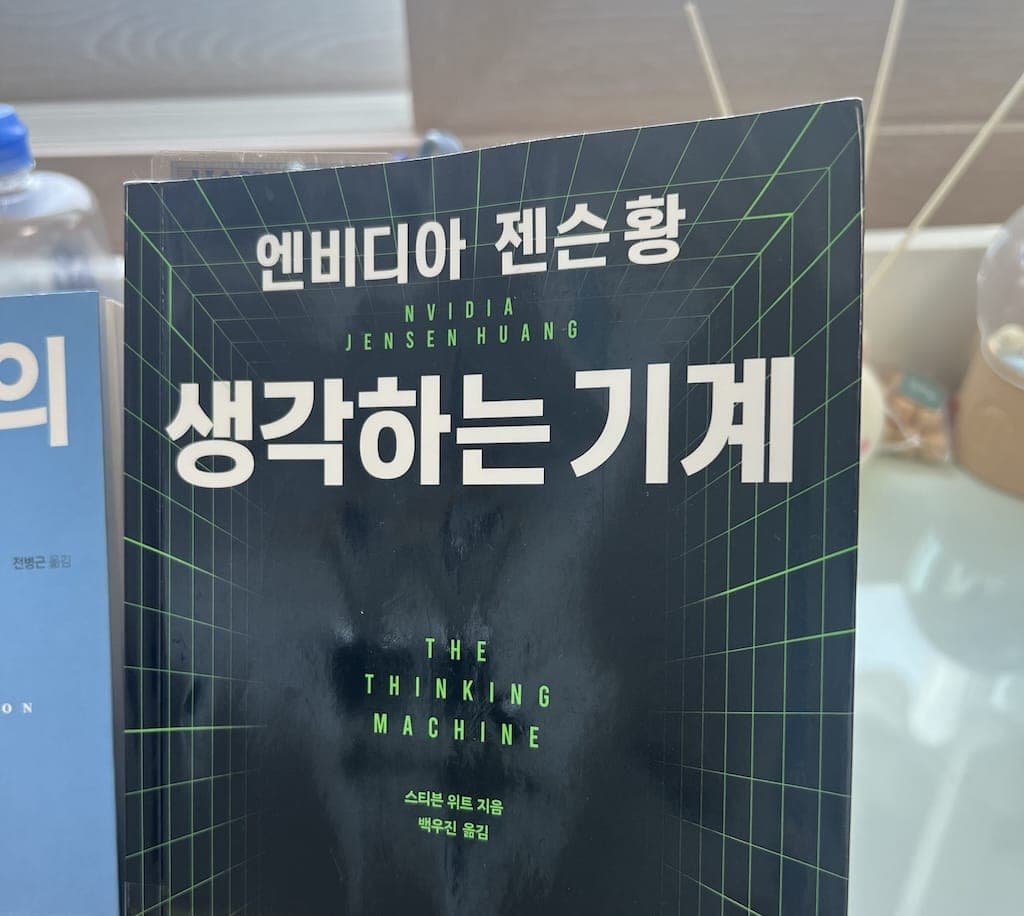 Book
Book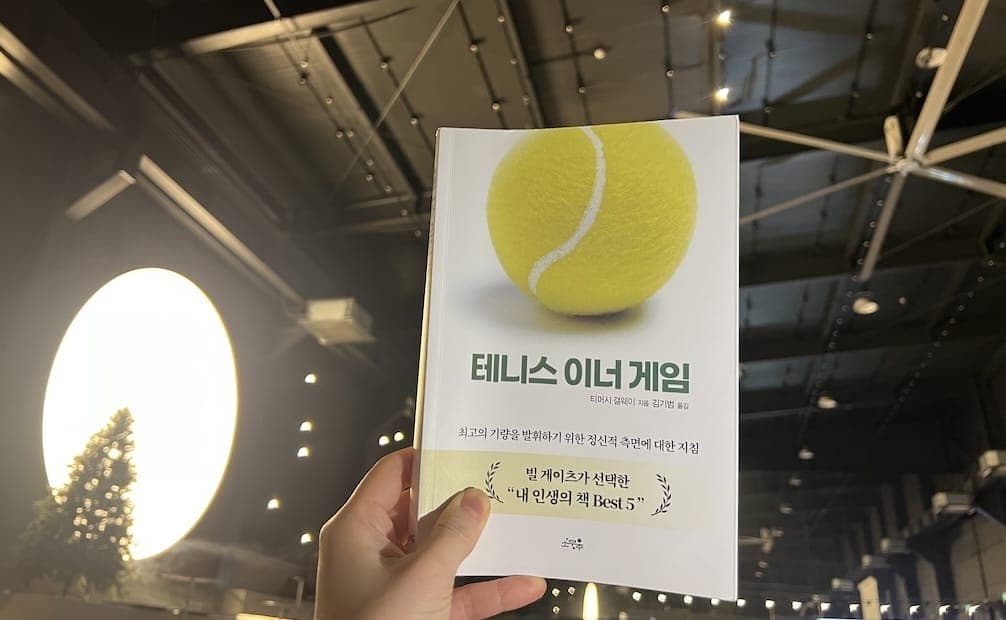 Book
BookAs I've been getting more into tennis lately, the book <The Inner Game of Tennis> that I read about two and a half years ago came back to mind. When I first read it, I didn't know much about tennis, so I felt like I only understood about 30% of its message. Even so, the book's message about "relaxed concentration" was helpful for life in general — and with renewed passion for tennis, I was curious how differently it would resonate the second time.