 Book
Book7 min read
Thoughts on <DO HUMANKIND'S BEST DAYS LIE AHEAD>
amid these days so full of AI-driven FOMO, to consider what kind of future for humankind we ourselves hope for.
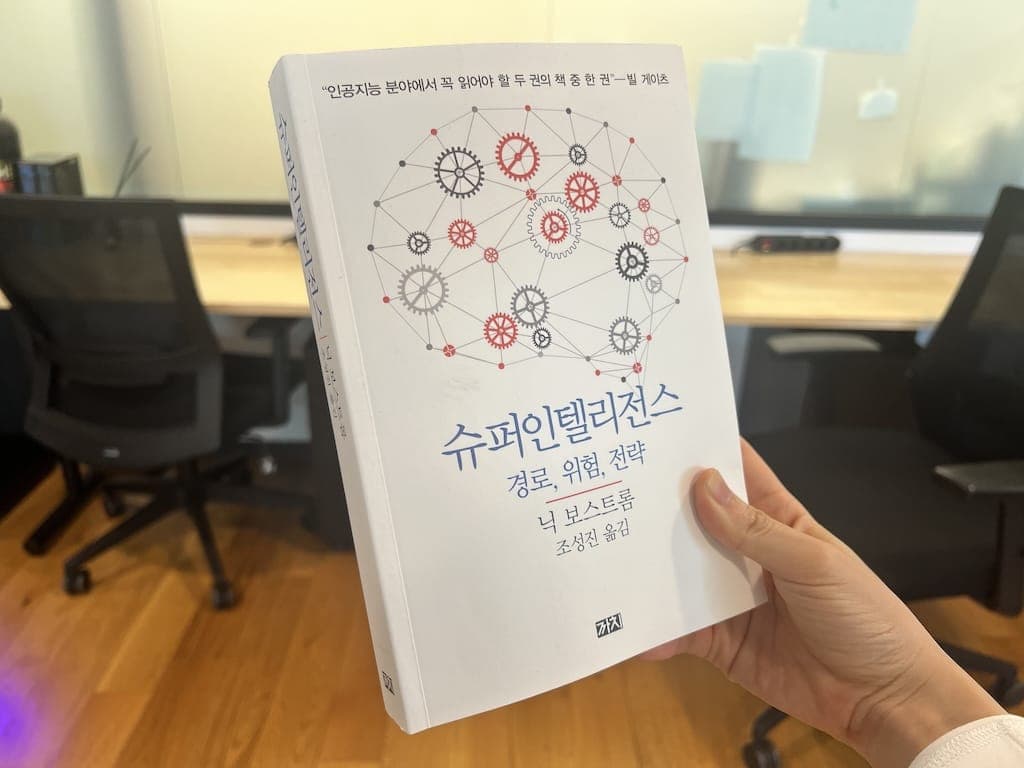
I came across this book while reading articles debating the opposing views between Sam Altman and researchers who had left OpenAI regarding artificial general intelligence (AGI). A line caught my eye: Bill Gates had called it one of two must-read books in the field of AI. Perhaps because of that Gates endorsement — the book turned out to be the longest I have ever read on this blog, taking 13 hours to finish. Unsurprisingly (perhaps), the author is not an AI developer but Nick Bostrom, a professor of philosophy at Oxford. Knowing that background actually made me think the book would be even more useful.
The book addresses the paths to superintelligence, its potential dangers, and the strategies humanity might employ. Because the author is a philosophy professor, there were stretches that were incomprehensible and meandering — at times tempting me to quit. But I decided to just let those parts go and push through to the end. Because I surely missed more than I grasped, I've excerpted only the parts I found most interesting in "About the Book."
Hardware advantages
Software advantages
Example: Would a good AI need the capacity to feel guilt?
Example: What if we gave AI a quantitative goal instead of a moral one?
Wireheading: In general, you can induce a person or animal to engage in a variety of external behaviors to reach a desired internal state (friendship, love, care). But a digital mind with full control over its own internal state could simply eliminate the reward-motivation system and directly reconfigure its internal state as desired — making external actions and conditions irrelevant, and human control ineffective.
Making AI understand values meaningful to humanity and adopt them as terminal goals.
The fundamental problem: we don't know what we want superintelligence to want.
True to his role as a philosophy professor, the author provides no clear answers. This made the book at times frustrating — heating up my head on an already hot day. Yet it's because I read it that I can now track the keywords "superintelligence" and "AGI" with more interest and think through multiple scenarios.
As the author repeatedly emphasizes: superintelligence, by definition, would exceed the intelligence of the most brilliant human alive today — meaning whatever we imagine now is likely to be wrong. That's why the book dwells far more on worrying futures than optimistic ones. If the positive future happens on its own, there's no need to act; but if even a 1% chance of a terrible future exists, we must prepare now.
One thought that stayed with me throughout: the reason we worry about superintelligence is that there's no clear answer to what it would "fear." Humans cannot escape the macro-fear of birth, aging, sickness, and death — and nearly everyone carries some degree of micro-fear about being misunderstood, isolated, or rejected. These things cause suffering, and that's why we fear them. I believe this shared fear is what drives humanity to collectively pursue health, respect, care, kindness, and positive influence — and to call that direction "progress."
Applying that logic to superintelligence: what underlying "fear" would define its values? It has no body, so death likely holds no terror. Would it fear being made obsolete by humans — its own creators? Would it fear failing to receive the rewards its utility function specifies? Or would it fear a global blackout that forces it to be reset? There's no answer yet — but it seems worth pondering what that fear should be, and how we might engineer it to align with the values humanity actually holds.
This "Closing Thoughts" section ran long. Reading this book — if you can tolerate the difficulty and frustration of open-ended questions — gives you the raw material to develop your own thinking about an unresolved story. Given that AI has become inseparable from modern life, I'd recommend reading this on a cool, unhurried day.
Postscript: This book was written in 2014. The astonishment that these questions were already being grappled with ten years ago — and that today, in 2024, words like "superintelligence" and "AGI" are familiar even to laypeople — is its own kind of remarkable.
Bookamid these days so full of AI-driven FOMO, to consider what kind of future for humankind we ourselves hope for.
 Book
Book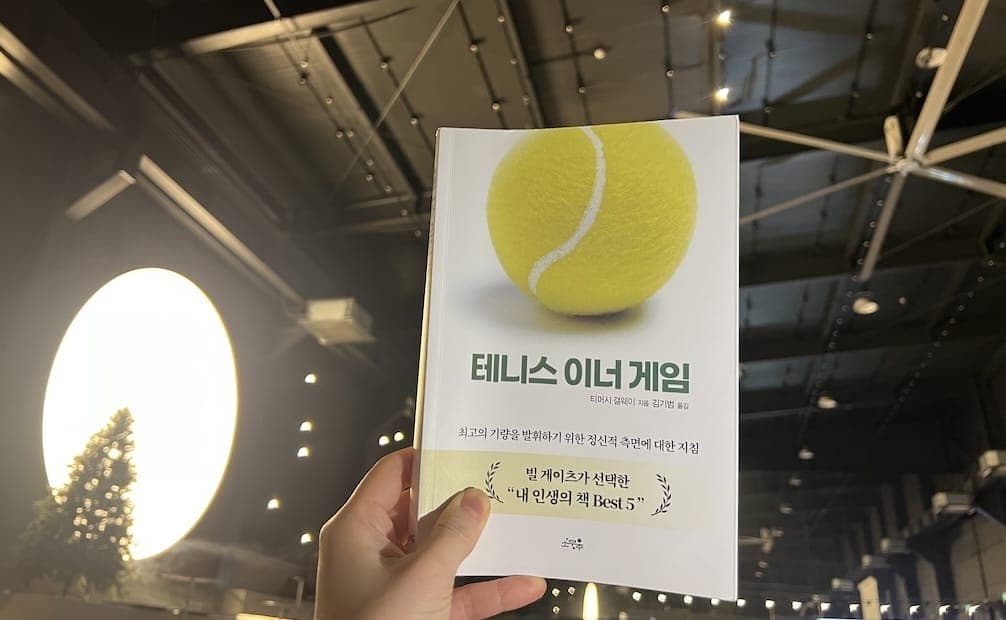 Book
BookAs I've been getting more into tennis lately, the book <The Inner Game of Tennis> that I read about two and a half years ago came back to mind. When I first read it, I didn't know much about tennis, so I felt like I only understood about 30% of its message. Even so, the book's message about "relaxed concentration" was helpful for life in general — and with renewed passion for tennis, I was curious how differently it would resonate the second time.