 Business
16 min read
#8 Are the Print Shops in Chungmuro Making Money?
I wanted to understand why Chungmuro has so many print shops.
My company office is located right next to Seongsu Station, so I've been watching Seongsu's transformation up close every day for about two years. Even during COVID, Seongsu was one of the few places where you could still see crowds on weekends, with construction going up on every block. One of the things that makes this dynamic neighborhood special is how many pop-up stores it has. Just as you can easily find blog posts like "First Week of July: Seongsu Pop-Up Stores Round-Up" online, new pop-up stores appear and disappear every single day. When I walk outside for lunch, I routinely catch myself saying "this place changed already" or "this one is already gone."
Over the past two years, I've been surrounded by famous pop-up stores like Dior, Peaches, and Scène — places people specifically plan a trip to visit — and until now I was content with just enjoying the spectacle. But lately, seeing a lot of pop-up store rental listings in real estate windows, I became curious about their profitability. That led me to learn more about Scène, the space closest to me.
These days, marketing that imprints a brand on consumers through "experience" is especially active. Go into a pop-up store and you'll find it's not just a display or exhibition — it actively drives user participation through photo booths, hand-washing experiences, augmented reality, and the like. From a business perspective, I also think this is a strategy to earn a "hip" image, activating emotion rather than reason, and creating a higher unit price relative to utility — boosting profitability.
Until the mid-2010s, stepping off the main road into Seongsu's side streets reportedly felt dark and even unsettling. The history of Seongsu becoming "cool" traces back to Daelim Warehouse, a logistics warehouse converted in 2011, followed by Zagmachi, a print shop remodeled in 2014, and Onion, a bathhouse converted in 2016. Then from 2020, with rents cheaper than Gangnam and a bridge connecting directly to Apgujeong, companies started relocating their headquarters here. As companies moved in, working professionals with spending power flowed into Seongsu — transforming the weekend-only commercial district into a seven-day one, and the Seongsu golden age began. Famous brand pop-ups drew visitors who then wandered into unknown emerging brand shops nearby — a trickle-down effect that brought more and more brands together, cementing Seongsu's status as the holy ground of pop-up stores.
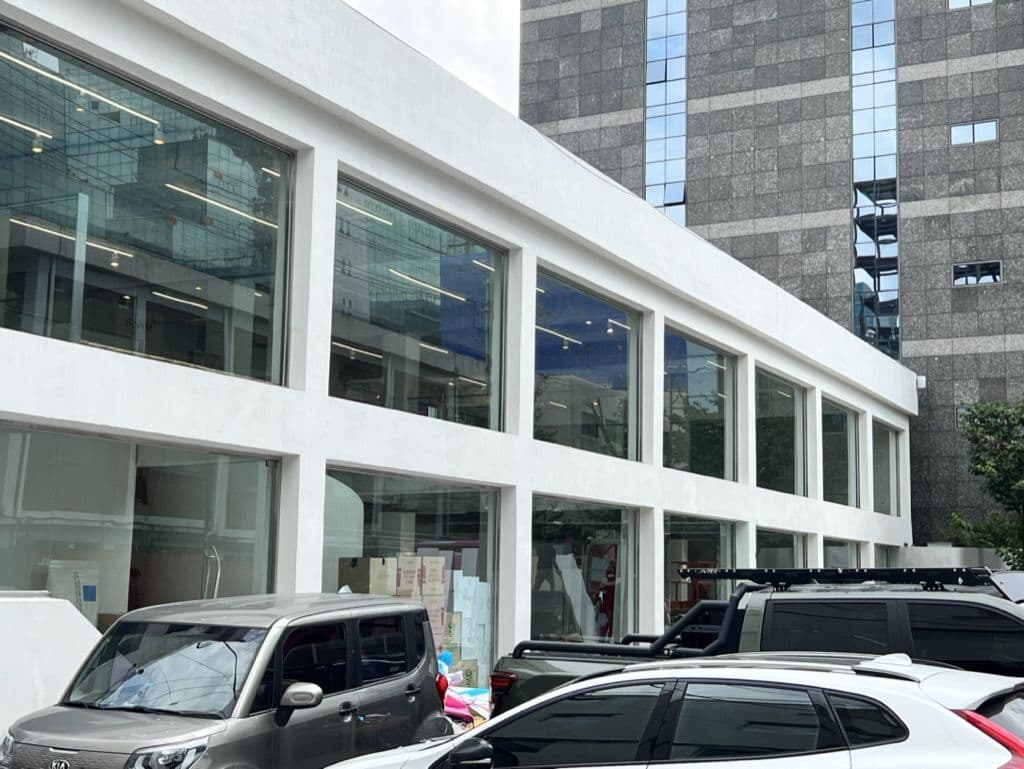
After our office first moved to Seongsu, I spent months puzzling over a white structure right in front of the building. It turned out to be Scène — operating a café on the 1st floor and a concept select shop on the 2nd floor. Through an analysis of Scène, I'll take a closer look at the hot pop-up business in Seongsu.
Company Overview
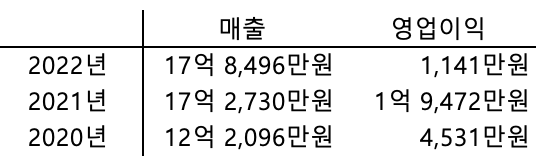
Scène Co., Ltd. revenue and operating profit
Property Overview
Even for someone like me with limited interest in this space, in the June–August period Scène hosted notable brand pop-ups including Le Sserafim, Hana Bank, Hoegaarden, and Coupang. Visiting the official website, in July all but 5 days (set aside for event setup) were fully booked with pop-up events — roughly 25 days of programming in a single month. Looking at the formats used:
Types by space usage
Here's my breakdown of Scène's revenue and cost structure. Writing out each line item, I was surprised to find that despite Seongsu's high rents, the profit margin of the space rental business is quite high. To achieve this level of profitability, a few structural elements are essential:
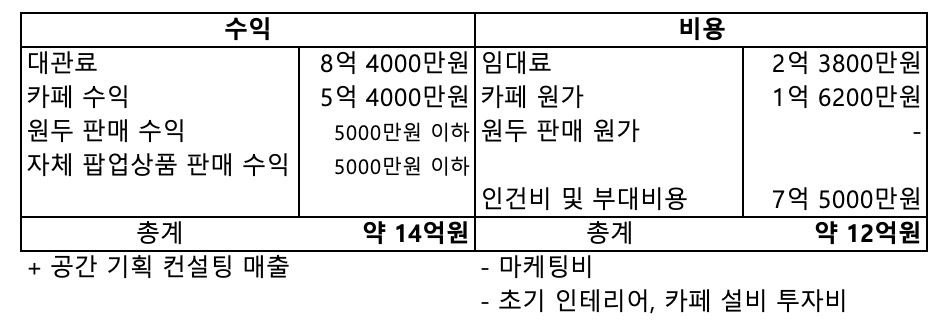
Revenue Assumptions
Cost Assumptions
Tallying these up, the revenue scale and profit scale roughly align with publicly disclosed figures. Additional variables worth noting: on the revenue side, consulting revenue for pop-up space planning may exist; on the cost side, marketing costs and initial interior/fit-out investment are not negligible.
Looking closely at what's happening in a place I used to walk by without a second thought gave me genuinely interesting stories and a lot to learn. In preparing this post, I came to understand that while venue rental businesses face physical constraints like location and rent, if you can grow the value of the space, those constraints become a moat — a great business that can sustain high margins over a long period. I gained a new perspective: it's not just products and services that have brands — spaces have brands too.
In retrospect, I've come to believe this business makes good money — but I also wonder: could I have imagined, looking at the skeletal shell of that old factory in 2019, turning it into this multi-purpose cultural space? Would anyone thinking through "café or restaurant or retail shop?" with a calculator alone have arrived at this business? In that sense, this reminds me once again — in a familiar way — of the lesson that entrepreneurs must be visionaries who see what others can't, and must have the tenacity to execute and turn it into results.
BusinessI wanted to understand why Chungmuro has so many print shops.
 Business
Disclaimer: Based on a presentation delivered at the Seoul National University blockchain club Decipher's Weekly Session on the topic 'The Future of Banking.' This article explores the new forms of banking that can emerge when 'banking as a business model' meets 'blockchain as a new technology,' and examines the changes underway. Nothing in this report constitutes investment advice.
 Business
September turned out to be even more of a whirlwind than I expected, but as it drew to a close I sat back down to write. I knew if I let the month end without posting at least one Money Machine piece, I'd regret it when I looked back at my monthly post counts later.